Bitcoin Payments in Hotels & Hospitality | Coinsnap Guide 2026

Bitcoin Payments in Hotels & Hospitality | Coinsnap Guide 2026

Hotels and accommodation providers operate in one of the most international, fast-moving, and payment-intensive industries in the world. Guests book from abroad, pay deposits in advance, settle invoices on arrival or departure, and spend across multiple services during their stay—from restaurants and wellness to activities and rentals.

In this environment, payments are not just an operational necessity. They shape the guest experience, influence booking conversion, and directly impact efficiency and margins.

Bitcoin and Lightning payments offer a practical alternative to traditional payment methods. They reduce friction in international transactions, simplify invoicing, and enable fast, direct payments across the entire hotel business.

With Coinsnap, hotels can accept Bitcoin payments online and at the point of sale, directly into their own wallet. There are no intermediaries holding funds, no chargebacks, and no need to change existing systems.

This guide explains where Bitcoin payments fit into the hospitality industry, why they are useful, and how Coinsnap enables them across the full customer journey—from booking to checkout.

Hotels can accept Bitcoin payments across the entire guest journey—from booking and deposits to on-site services and checkout. With Coinsnap, payments are processed instantly via Lightning or on-chain, without chargebacks, intermediaries, or changes to existing systems.

Why the Hospitality Industry Is Ideal for Bitcoin Payments

Few industries combine international reach, operational complexity, and payment diversity quite like hospitality. This makes hotels a natural fit for Bitcoin payments.

International clientele and payment friction

Hotels attract guests from all over the world. That sounds like a pure advantage—but on the payment side, it creates constant friction. Currency conversions, cross-border fees, regional payment restrictions, and card acceptance issues are part of daily operations.

For a guest, paying a hotel abroad can quickly become more complicated than expected. For the hotel, accepting those payments often means higher fees, delays, and occasional failures.

Bitcoin removes much of this friction. Payments are global by default, independent of banking systems, and do not require currency conversion infrastructure. A guest can complete a payment instantly via Lightning, or reliably via an on-chain transaction, without depending on card networks or international transfers.

Upfront payments for reservations

Many hotels require deposits, reservation guarantees, or full prepayments—especially during peak seasons or for high-value bookings. These payments often come from international guests, where sending money abroad may be slow, expensive, or even restricted.

Bitcoin offers a neutral payment rail that works regardless of geography or local banking limitations. A guest can complete a reservation payment within seconds, without needing a credit card or navigating international bank transfers.

Platform-based bookings and off-platform payments

Booking platforms such as Booking.com or Airbnb frequently separate booking from payment. Options like “pay at property” or “pay later” create a natural gap between reservation and settlement.

Hotels can use this gap strategically. A booking can be confirmed through the platform, while the actual payment is handled directly by sending a Bitcoin payment request for a deposit or the full amount.

This approach gives hotels more control over the payment process. It reduces friction, adds flexibility for international guests, and can improve conversion in situations where traditional payment methods fall short.

Invoice-driven workflows

Invoicing sits at the core of hotel operations. Reservation confirmations, deposit requests, final invoices, and B2B billing for events or group bookings all rely on structured payment requests.

Traditional invoice payments tend to be slow and manual. Guests must enter bank details, reference numbers, and wait for confirmation. Errors happen, and reconciliation takes time.

Bitcoin turns an invoice into a direct payment action. Instead of instructions, the guest receives a simple way to pay immediately, without ambiguity or delay.

Multiple revenue streams within the hotel

A hotel is more than a place to sleep. It operates restaurants and bars, spa and wellness services, rentals, excursions, and various personal services.

Each of these touchpoints requires payments that are fast, flexible, and easy to complete. Bitcoin, particularly via Lightning, fits naturally into this environment. It enables small, spontaneous, mobile-first transactions that align with how guests behave during their stay.

Whether paying for a drink, booking a massage, or renting equipment, the experience becomes quick and frictionless.

Checkout and final settlement

At the end of a stay, guests are often presented with a consolidated bill covering multiple services. This can become a point of friction, especially for international travelers dealing with currency conversions, card limits, or unfamiliar payment processes.

Bitcoin simplifies this final step. The invoice becomes a QR code, and the guest completes the payment instantly—either via Lightning for speed or on-chain for larger amounts.

There are no forms to fill out, no delays, and no uncertainty. The transaction is completed directly and finally.

Key Benefits of Bitcoin Payments for Hotels and their Guests

Bitcoin payments are not just an alternative—they solve specific, recurring problems in the hospitality business.

Benefits for hotels

For hotels, the most immediate impact is a reduction in payment friction. International transactions become simpler, and there is no need to deal with complex banking details or failed card payments.

Settlement is faster as well. Payments arrive directly in the hotel’s wallet, either instantly via Lightning or within minutes on-chain. This improves cash flow and reduces dependency on third-party processors.

A particularly important advantage is the absence of chargebacks. Bitcoin and Lightning payments are final. Once a transaction is completed, it cannot be reversed by the payer. For hotels, this removes a significant source of risk and administrative overhead. There are no post-checkout disputes, no fraud-related reversals, and no need to manage chargeback processes. This is especially relevant for high-value bookings, international reservations, and no-show scenarios.

Costs are typically lower compared to traditional payment methods, particularly for cross-border transactions. At the same time, Bitcoin can be added as an additional payment option without replacing existing systems. Hotels can integrate it alongside cards and bank transfers without disrupting their current setup.

Finally, offering Bitcoin payments can attract new customer segments. International travelers, tech-savvy guests, and customers actively looking for crypto-friendly businesses may prefer or even expect this option.

Benefits for guests

For guests, the experience becomes simpler and more predictable. Payments can be made from anywhere without worrying about currency conversion, bank restrictions, or card compatibility.

The process itself is faster. A QR code scan replaces the need to enter payment details or wait for confirmations. This reduces friction at every stage, from booking to checkout.

Privacy is another factor. Guests can complete payments without sharing sensitive financial information, which is increasingly important for many travelers.

At the same time, Bitcoin payments in hotels offer flexibility. Guests can choose between Lightning for fast, everyday payments or on-chain transactions for larger amounts, depending on their preference.

Bitcoin Payments Across the Hotel Customer Journey

Bitcoin payments are not limited to a single interaction. They can be integrated across the entire lifecycle of a guest’s stay.

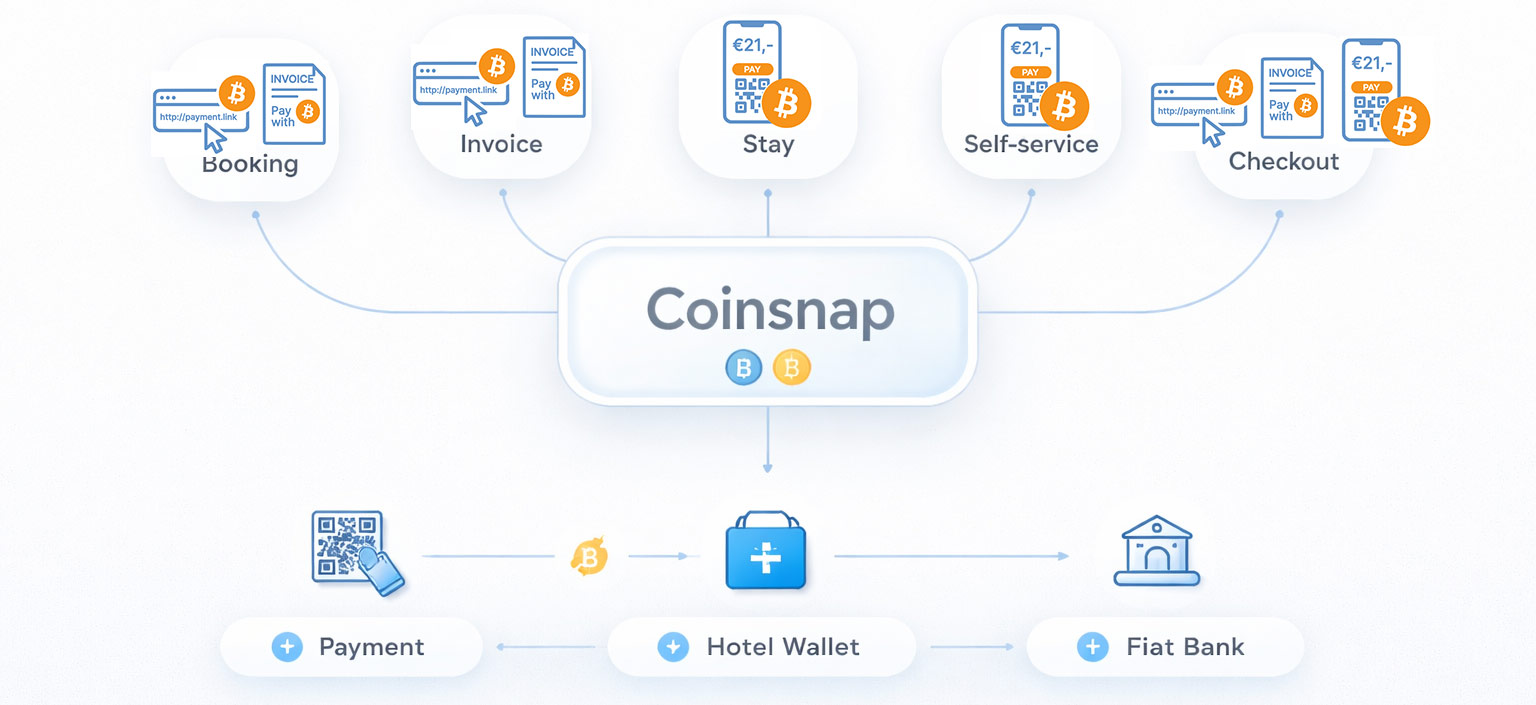
How Bitcoin payments in hotels work with Coinsnap


Booking and reservation payments

At the booking stage, hotels can request deposits or full prepayments by sending a payment link or invoice. This works both for direct bookings and for reservations made through platforms where payment is not processed immediately.

For international guests or last-minute bookings, this can significantly reduce friction and speed up confirmation.

Bitcoin Payment Link

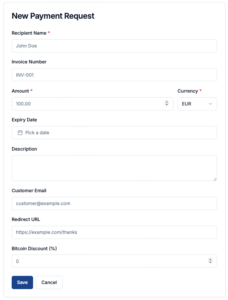
Coinsnap Payment Link for Bitcoin payments in hotelsThe Bitcoin Payment Link is the simplest way to accept Bitcoin payments without relying on a shop system, payment gateway, or dedicated website. It is designed for situations where a hotel—or any business—already communicates payment requests directly, for example via email, messaging, or booking communication.
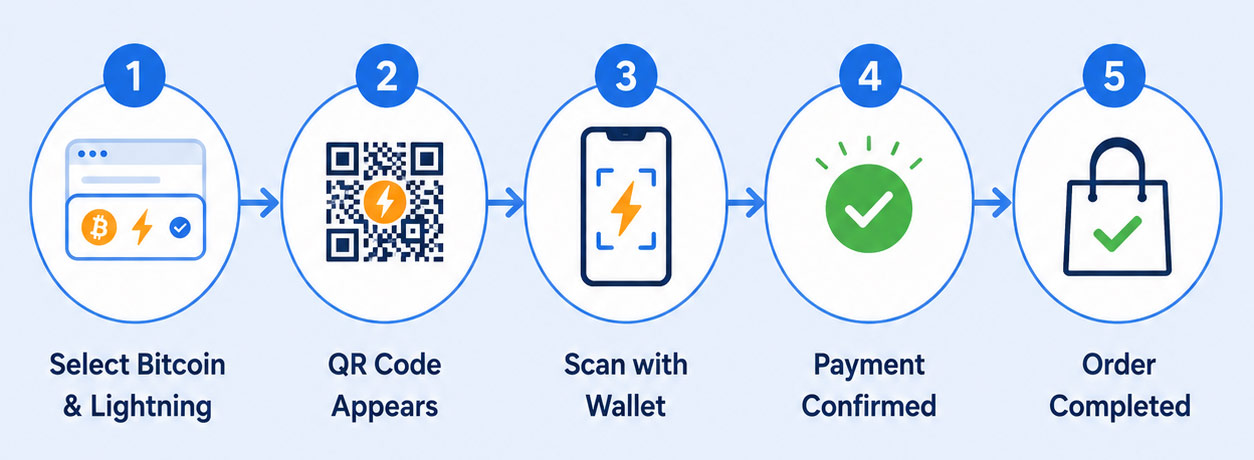
Instead of providing bank details or payment instructions, the hotel includes a payment link. When the guest opens it, they are taken to a Coinsnap-hosted payment page, where they click “Pay with Bitcoin” and complete the payment by scanning a QR code with their wallet.

The Payment Link does not replace invoicing or booking systems. It works alongside them. This makes it particularly useful for reservation deposits, prepayments, and B2B bookings, where invoices are created and sent through existing workflows, but payment itself should be faster and simpler.

Because the payment page is fully browser-based, it works on any device and requires no installation. Payments are processed instantly and forwarded directly to the hotel’s wallet, a connected BTCPay Server, or—if preferred—converted into fiat via Coinsnap partners.

👉 Learn more about the Bitcoin Payment Link and start accepting Bitcoin payments without changing your existing processes.

Bitcoin Invoice

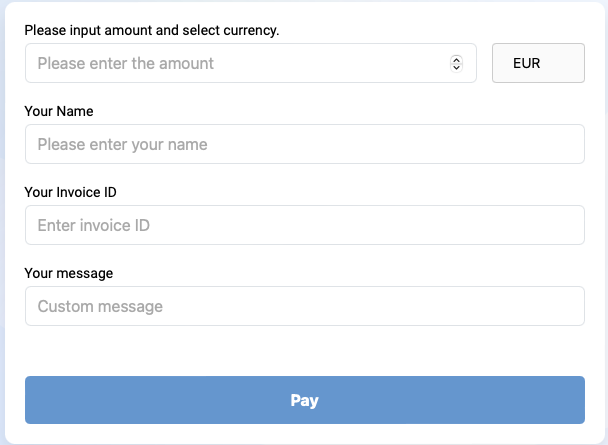
Coinsnap Bitcoin Invoice for Bitcoin payments in hotelsThe Bitcoin Invoice pay-tool is designed to let customers settle invoices that have already been issued—without changing how those invoices are created or sent. It does not generate invoices itself. Instead, it provides a dedicated Bitcoin payment form that customers can use to pay an existing invoice.
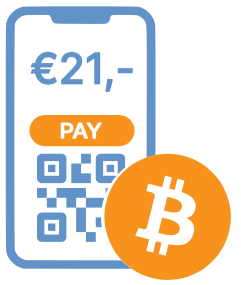
The process is straightforward. The hotel sends its invoice as usual—via email, booking system, or accounting software—and includes a link to a Bitcoin payment page or embedded form. The guest opens this page, enters the invoice amount and reference, clicks “Pay with Bitcoin,” and completes the payment by scanning a QR code with their wallet.

This makes the Bitcoin Invoice particularly useful for hotels that rely on external invoicing systems or custom workflows. It fits seamlessly into existing processes while adding a global, low-friction payment option—without relying on card networks or bank transfers.

Payments are sent directly to the hotel’s configured destination, whether that is a Lightning wallet, an on-chain wallet, a connected BTCPay Server, or—if preferred—converted into fiat via Coinsnap partners.

👉 Explore the Bitcoin Invoice pay-tool and enable simple, borderless invoice payments with Bitcoin.

B2B bookings and group arrangements

Hotels regularly handle corporate bookings, conferences, and group stays. These arrangements often involve large upfront payments, international clients, and complex invoicing structures.

Bitcoin payments in hotels simplify thes processes by enabling fast, direct payments that are not dependent on banking timelines or regional restrictions.

In these scenarios, both Payment Links and Bitcoin Invoices provide efficient ways to handle large transactions while keeping the process simple for the client.

Payments during the stay

During the stay, guests interact with multiple services. Payments for food, drinks, wellness, or activities can be handled quickly through a simple point-of sale interface.

Web Point of Sale (WebPoS)

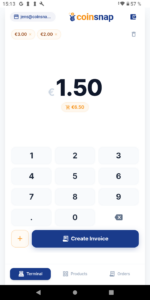
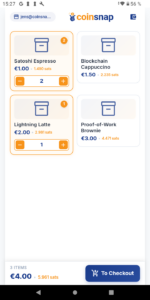
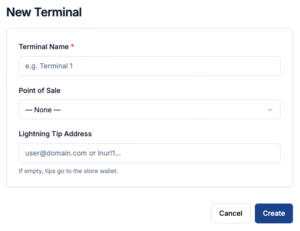
Coinsnap WebPoS for Bitcoin payments in hotelsThe Web Point of Sale is designed for in-person payments, allowing hotels to accept Bitcoin and Lightning anywhere on-site—at the front desk, in the restaurant, at the bar, in the spa, or at temporary service points. It runs entirely in the browser, so any smartphone, tablet, or computer can be used without installing apps or specialized hardware.
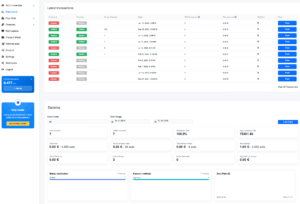
Staff can either select items from a simple product catalog or enter amounts manually, making it suitable for both structured sales and flexible scenarios such as services, tips, or ad-hoc charges. The interface is intuitive and built for everyday use, enabling team members to accept payments quickly and reliably, even in busy environments.

At the same time, the WebPoS is highly versatile. It can also be used in self-service settings—such as minibar stations, rental areas, or unattended service points—where guests complete payments independently by scanning a QR code.

All payments are processed instantly and sent directly to the hotel’s configured wallet or settlement destination, while operational control remains with the business, even when multiple staff members use the system.

👉 See how the WebPoS enables flexible, staff-friendly, and self-service Bitcoin payments across your hotel.

Self-service payments

Self-service areas are increasingly common in hotels. Whether it is a minibar, a rental station, or a shared facility, guests expect to be able to pay independently.

The WebPoS can be placed directly at these touchpoints, allowing guests to select an item and complete the payment instantly using their smartphone—without staff involvement.

This reduces operational overhead while improving convenience.

Checkout and final invoice

At checkout, Bitcoin turns the final invoice into a direct payment interaction. Instead of processing a card or waiting for a transfer, the guest scans a QR code and completes the transaction immediately.

Both the Bitcoin Invoice and the WebPoS can be used here, depending on how the hotel structures its checkout process.

Coinsnap Solutions for Every Hotel Payment Scenario

Coinsnap covers every Bitcoin payment use case in the hospitality business. Whether it’s reservation payments, invoicing, in-person transactions, or self-service payments, each scenario is supported by a dedicated solution that integrates seamlessly into existing hotel workflows.

If a specific edge case requires a custom setup, Coinsnap’s open architecture—with APIs, open-source components, and detailed documentation—ensures it can still be implemented with acceptable effort.

Bitcoin Payment Integration (API & Plugins)

For hotels that want to fully integrate Bitcoin payments into their existing systems, Coinsnap offers a flexible integration layer based on APIs, plugins, and open-source components. This allows payment functionality to be embedded directly into hotel management software or custom invoicing systems.

Instead of adding payments externally, Bitcoin becomes part of the native workflow—from booking confirmation to automated invoicing and checkout. This is particularly valuable for hotels with established digital infrastructure or specific operational requirements.

Thanks to detailed documentation and a modular architecture, integration can be implemented efficiently and adapted to individual needs.

👉 Discover how Coinsnap integration brings Bitcoin payments directly into your hotel systems.

Coinsnap Dashboard

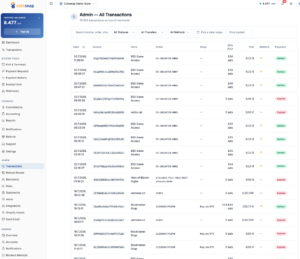
Coinsnap Dashboard: make Bitcoin payments in Hotels transparent!The Coinsnap Dashboard gives hotel management full visibility over all Bitcoin payments in real time. Every transaction—whether from booking deposits, invoices, point-of-sale payments, or self-service—is clearly recorded and accessible in one central interface.

For each payment, all relevant details are available, including timestamps, amounts in Bitcoin and fiat equivalents, transaction status, and references that can be linked to bookings or invoices. This makes it easy to track revenue across different areas of the hotel and maintain a clear overview at all times.

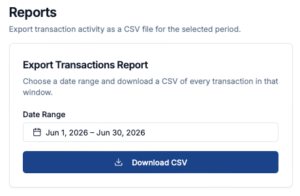
For accounting and tax purposes, transaction data can be exported in structured formats, allowing seamless integration into existing bookkeeping and reporting workflows such as PayinBTC.me or Cointracking. This ensures that Bitcoin payments fit cleanly into standard financial processes without additional complexity.

👉 Explore the Coinsnap Dashboard and keep full control over your Bitcoin payment operations

Which Coinsnap Solution Fits Which Use Case?

Different scenarios require different tools, but they all fit into a coherent system.

For hotels using their own booking software, API integration allows payments to be embedded directly into the booking and invoicing flow. This creates a seamless experience from reservation to payment.

For platform-based bookings where payment happens outside the platform, Payment Links and Bitcoin Invoices provide a simple way to request deposits or full payments. If the guest pays on arrival, the WebPoS offers a flexible option at the front desk.

In B2B scenarios, Payment Links and Invoices are particularly effective, as they simplify large, cross-border transactions and reduce administrative complexity.

For daily operations such as restaurants, wellness services, rentals, or personal services, the Web-PoS is the most practical tool. It enables fast, direct payments and fits naturally into staff workflows.

In self-service environments, the same Web-PoS interface can be used without staff involvement, allowing guests to pay independently.

At checkout, all options come together. The final invoice can be settled via a link, an invoice page, or directly at the point of sale, depending on the setup.

Common Concerns About Bitcoin Payments in Hotels

While Bitcoin payments offer clear advantages, hotels often have practical concerns.

Volatility is one of the most common. However, hotels do not need to hold Bitcoin. Payments can be converted into fiat currency through integrated partners like Wave.space, Bringin or DFX, allowing businesses to receive euros or other currencies directly.

Accounting is another consideration. Coinsnap provides transaction data that can be exported and integrated into existing accounting workflows, ensuring proper documentation and compliance.

Complexity is often overestimated. There is no need to run nodes, manage infrastructure, or develop custom systems. Setup is straightforward and can be completed quickly.

From the guest perspective, usability is simple. Paying with Bitcoin is reduced to scanning a QR code. No technical knowledge is required.

Conclusion – Why Your Hotel Is Ready for Bitcoin Payments

Hotels operate in a demanding payment environment shaped by international guests, multiple revenue streams, and diverse transaction scenarios.

Bitcoin payments in hotels offer a practical way to reduce friction, improve efficiency, and simplify operations across the hotel business while attracting a new generation of crypto-savvy guests.

They enable faster international payments, streamlined invoicing, seamless point-of-sale transactions, and reliable, final settlements without chargeback risk.

With Coinsnap, hotels can integrate these capabilities into their existing systems without disruption, avoiding the need for expensive consultants and leaving core business IT and operations untouched.

For accommodation providers looking to modernize their payment infrastructure and improve the guest experience, Bitcoin is not an experiment. It is a working solution that fits naturally into the way hotels already operate.

FAQ

Why should hotels accept Bitcoin payments?

Bitcoin payments reduce friction in international transactions, lower fees, and eliminate chargebacks while improving the guest payment experience.

Can Bitcoin be used for hotel bookings?

Yes. Hotels can request deposits or full payments using Bitcoin Payment Links or Bitcoin Invoices, even for bookings made via platforms.

How do hotels accept Bitcoin at the front desk?

Hotels can use a Web Point of Sale where staff enter the amount and guests pay by scanning a QR code.

What is the best Bitcoin payment solution for hotels?

A flexible solution like Coinsnap is ideal, as it covers booking, invoicing, point-of-sale, and checkout scenarios.

Do Bitcoin payments work for small transactions in hotels?

Yes. Lightning payments are optimized for fast, low-cost transactions, making them ideal for restaurants, bars, and services.

How are Bitcoin payments handled in hotel accounting?

Transaction data can be exported and integrated into standard accounting systems, including fiat values and timestamps.

How Wave.space offers seamless Bitcoin to Euro Conversion

Wave.space & Coinsnap: A Smooth Way to Accept Bitcoin and Receive Euros

Wave.space may be the right solution for many merchants who find Bitcoin payments interesting, but do not necessarily want to hold Bitcoin. A shop owner may want to accept Bitcoin because customers ask for it. A service provider may value the speed of Lightning payments. A business may want to avoid chargebacks or receive international payments more easily.

But at the end of the day, many businesses still pay their rent, suppliers, staff, and taxes in euros. That creates a simple question. Can a customer pay in Bitcoin, while the merchant receives euros?

Coinsnap already offers solutions for this. With partners such as Bringin and DFX, merchants can accept Bitcoin payments through Coinsnap and receive the value in euros instead of keeping Bitcoin on their balance sheet. These options are especially useful for businesses that want to offer Bitcoin at checkout, but still manage their daily operations, accounting, and cash flow in fiat currency.

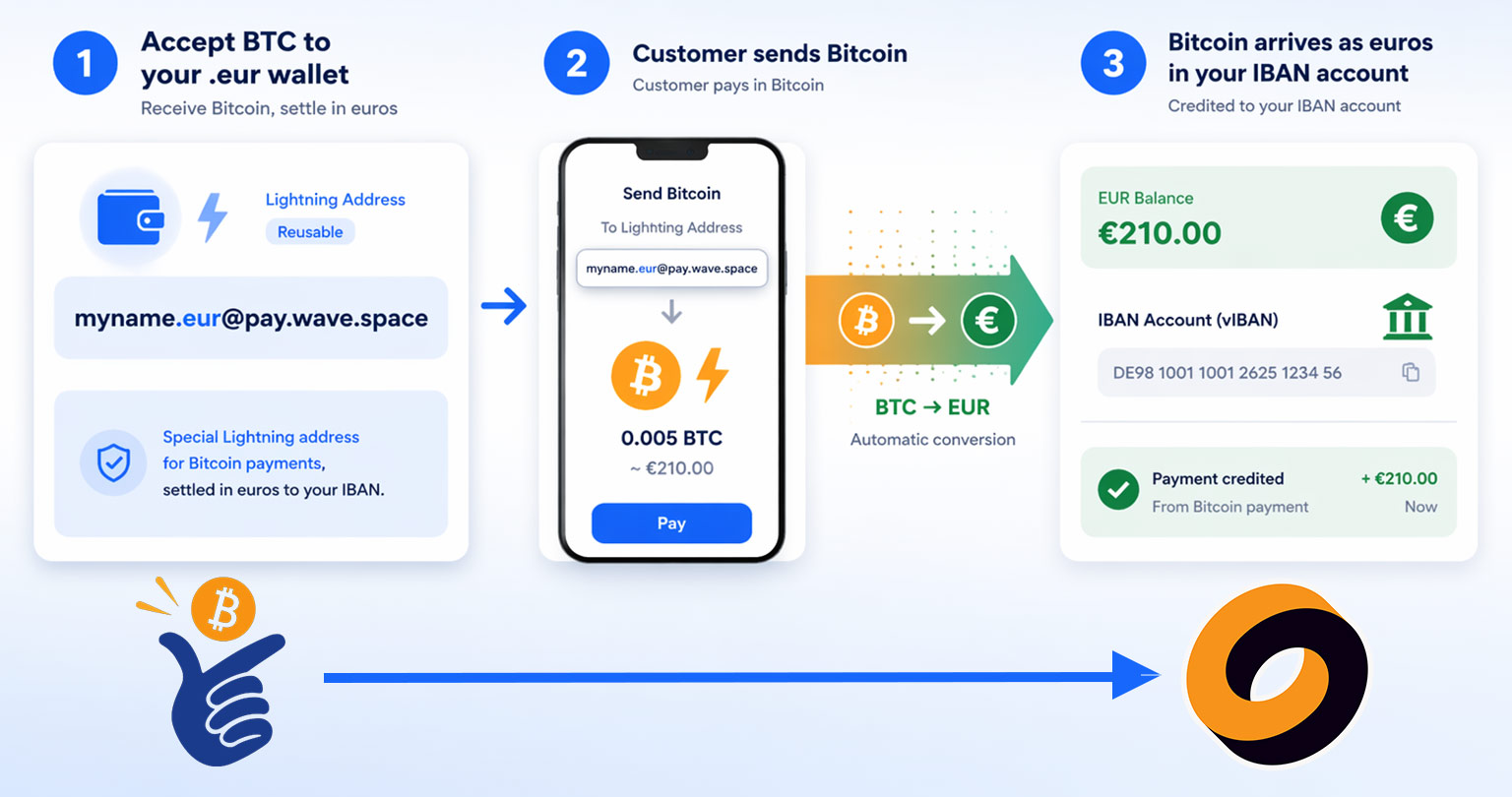
And now, with Wave.space, Coinsnap merchants have an even simpler, more elegant, and more convenient way to sell for Bitcoin — while receiving euros: With the new Wave.space app, and its new Lightning address feature, Wave.space now makes this process even easier. With just one small addition to that address, incoming Bitcoin payments can be converted into euros automatically.

Can I auto-convert Bitcoin to Euro with Coinsnap?

Yes. With Coinsnap and a wave.space Lightning address like yourname.eur@pay.wave.space, incoming Bitcoin payments can be automatically converted into euros and credited to your personal vIBAN.

A Lightning Wallet for Bitcoin — With a Built-In Euro Option

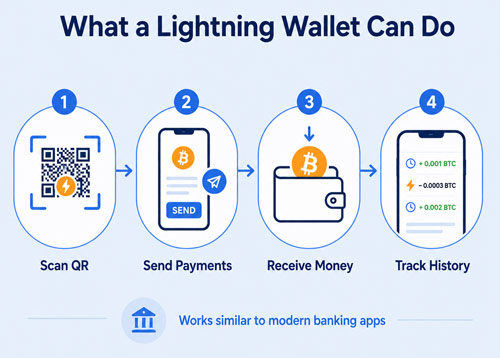
Wave.space works like a classic Lightning wallet. You can use it to send Bitcoin, receive Bitcoin, and handle everyday Lightning payments in the usual way. But Wave.space adds one feature that makes it especially interesting for merchants: every wallet comes with a personal Lightning address. A normal Wave.space Lightning address looks like this: myname@pay.wave.space

This address works like a reusable Bitcoin payment address. People can send Bitcoin to it, and the payment arrives in your Lightning wallet. The clever part starts when you add “.eur” to the name part of the address. So instead of: myname@pay.wave.space you use:

myname.eur@pay.wave.space

Receive Bitcoin - get Euro with Coinsnap and Wave.space

For the customer, nothing changes. They still pay with Bitcoin. But now the payment flow changes. The sender still pays in Bitcoin, but Wave.space automatically converts the incoming BTC into euros and credits the amount to the user’s personal vIBAN.

For merchants, this is the important point. The same Wave.space wallet can be used as a normal Lightning wallet when you want to receive Bitcoin, or as a simple BTC-to-euro receiving solution when you prefer to settle incoming Bitcoin payments in euros.

That makes it a very practical option for Coinsnap merchants who want to accept Bitcoin payments, but keep their business cash flow in euros.

Why This Matters in Normal Business Life

Many businesses are not trying to become Bitcoin treasury companies. They simply want another payment option. They want customers to be able to pay with Bitcoin, but they also want their accounting to remain simple. They want to know how much money they have in euros. They want to pay invoices from suppliers. They want to avoid extra manual work.

This is where the Wave.space Lightning address can help. The merchant can decide from the beginning what should happen with incoming payments. If they want to keep Bitcoin, they use the normal address. If they want euros, they use the “.eur” address.

That makes the setup easy to explain, easy to remember, and easy to operate.

A Simple Example

Imagine a small online shop that uses Coinsnap to accept Bitcoin payments. The shop owner likes the idea of Bitcoin payments, but does not want to hold Bitcoin every day. The business buys goods in euros, pays rent in euros, and does bookkeeping in euros. So instead of connecting a Bitcoin-only Lightning wallet in his Coinsnap account, the shop owner connects a Wave.space address like:

shopname.eur@pay.wave.space

Now customers can still pay with Bitcoin at checkout. But when the payment reaches the Wave.space address, it is converted into euros automatically. The shop owner does not need to explain Bitcoin to the accountant. The business does not need to manually convert every payment. And the customer still gets the Bitcoin payment option they wanted.

The Normal Bitcoin Address Still Has Its Place

Of course, not every merchant wants automatic conversion. Some merchants want to receive and keep Bitcoin. For them, the normal Wave.space Lightning address is the better option. That would look like this:

shopname@pay.wave.space

In that case, Bitcoin payments remain Bitcoin payments. This gives merchants a clear choice. They can use the normal address when they want Bitcoin, or the “.eur” address when they prefer euros. That is the strength of the setup. It does not force one model on every business.

The “Link” Feature Works in the Other Direction

Wave.space also introduced another feature called Link. This feature should not be confused with the “.eur” Lightning address.

The “.eur” Lightning address is about receiving Bitcoin and converting it into euros. The Link feature works in the other direction. It gives a wallet its own dedicated IBAN. When euros are sent to that IBAN, Wave.space automatically converts the euros into Bitcoin and sends the Bitcoin to the selected wallet.

So Link is mainly useful when someone wants to move euros into Bitcoin automatically. For Coinsnap merchants, the more relevant feature is usually the Lightning address with “.eur”, because it can help turn incoming Bitcoin payments into euros.

A More Practical Way to Use Lightning

The new Wave.space app is interesting because it makes Bitcoin payments easier to handle in normal business situations. The key point is not that every merchant must now use Bitcoin in the same way. The key point is choice.

A merchant who wants to receive Bitcoin can use a standard Lightning address. A merchant who wants to receive euros can use the “.eur” version.

And a Coinsnap merchant can potentially use that “.eur” address directly as the payout wallet in the Coinsnap account, so Bitcoin payments from customers are converted into euros after settlement.

That makes the setup easier to understand for non-technical users. The customer pays in Bitcoin. Coinsnap handles the Bitcoin payment. Wave.space receives the Lightning payout.

And if the merchant uses the “.eur” address, the merchant receives euros. For many businesses, that is exactly the kind of Bitcoin payment setup they need: simple for the customer, practical for the merchant, and easy enough to explain without technical language.

What Is an xPub Key?

Understanding xPub Keys: How Coinsnap Enables Direct Bitcoin Self-Custody for Merchants

What Is an xPub Key – and Why Is It Important for Coinsnap?

A simple introduction for Bitcoin beginners and Coinsnap merchants.

Bitcoin is an open, transparent, and self-sovereign monetary network. Merchants who accept Bitcoin often prefer receiving funds directly into their own wallet — without intermediaries, custodians, or centralized services.
To make this possible, Coinsnap relies on an important Bitcoin concept: the xPub key.

This article explains what an xPub key is, why Coinsnap uses it, and how merchants can set it up in a few minutes.

What Is an xpub Key (Explained Simply)?

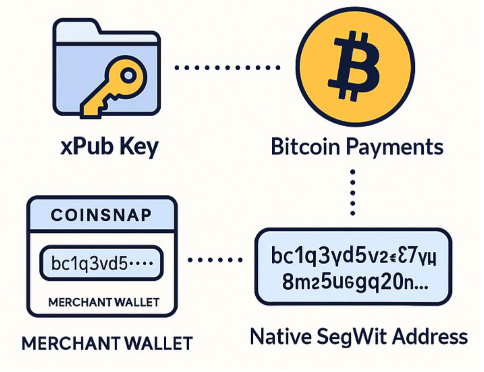
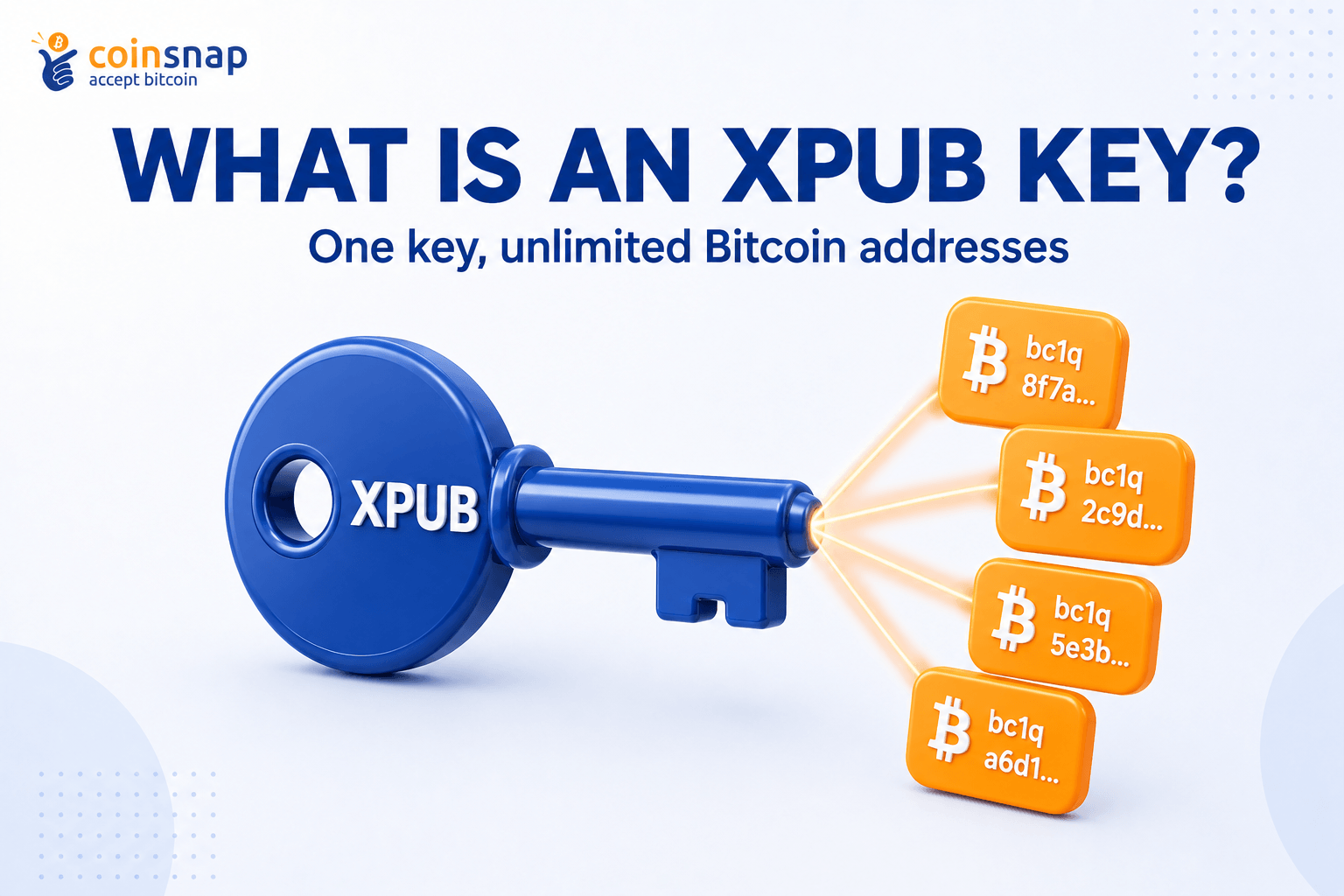
An xpub key (Extended Public Key) is like the master public key of your Bitcoin wallet.
In other words:
  • From a single xpub key, your wallet (or Coinsnap) can generate an unlimited number of receiving Bitcoin addresses.
  • The xpub cannot spend coins — it only allows creating new, unique receiving addresses.
  • You stay in full control of your Bitcoin at all times.
  • You never need to manually create a new on-chain address for every customer payment again — Coinsnap does this automatically.
Think of your xpub key as an “address generator” that:
  • does not expose private keys
  • does not allow spending
  • but does allow generating new Bitcoin receiving addresses forever

xPub Key

Why Coinsnap Recommends Native SegWit (bc1q…)

Bitcoin supports several types of on-chain addresses. The newest and most efficient typestarts with:

bc1q…

These are Native SegWit addresses (BIP84).
Coinsnap recommends them because they offer:
  • lower transaction fees
  • modern and efficient design
  • broad compatibility across all self-custodial wallets
  • excellent future-proofing

If your wallet is using Native SegWit, the master public key will often be called:

  • zpub (or sometimes still xpub, e.g. in Sparrow Wallet)

Coinsnap is able to generate correct bc1q on-chain addresses from either an xpub or a zpub— as long as the wallet uses the BIP84 standard.

How Coinsnap Uses Your xPub Key

Whenever a customer pays an on-chain Bitcoin invoice, Coinsnap automatically generates a new Bitcoin address derived from your xPub key.

The process:

  1. You save your xPub key inside your Coinsnap dashboard.

  2. Coinsnap creates a new address for each incoming order.

  3. The customer pays directly to your self-custody wallet.

  4. Coinsnap never holds or controls your funds.

You enjoy automated address generation while maintaining full control of your Bitcoin.

What Happens With Lightning vs. Bitcoin Payments?

Coinsnap supports both Lightning and On-Chain Bitcoin payments:

1. Lightning Payments

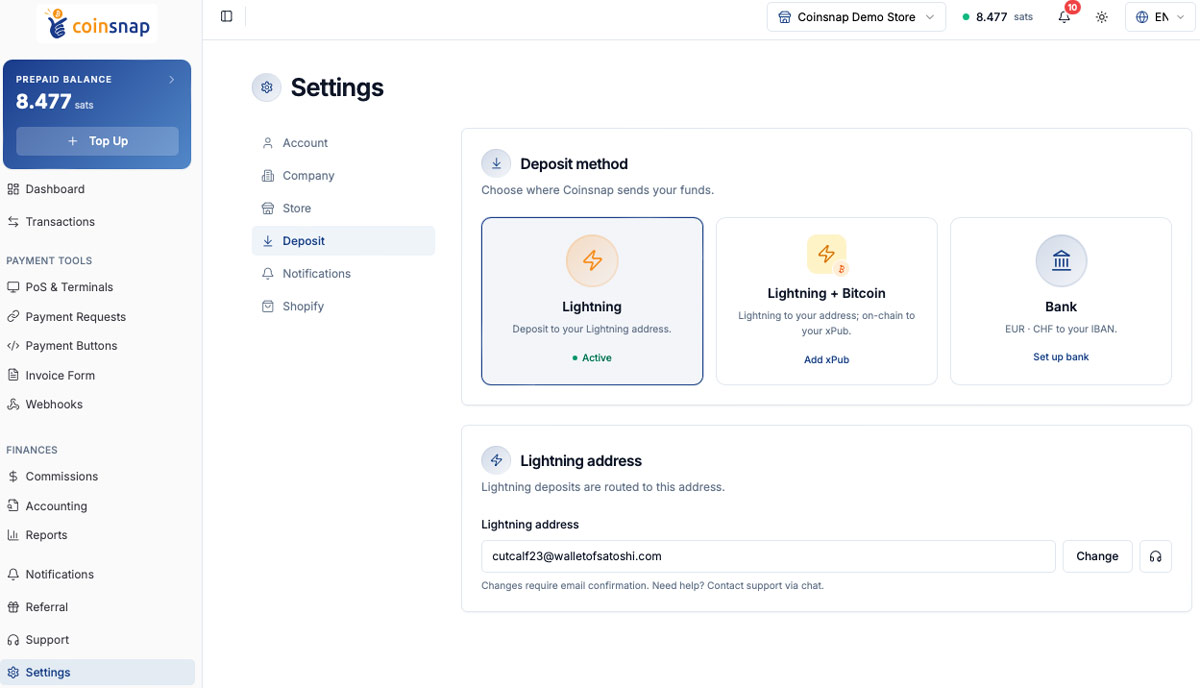
You must provide a Lightning Address when setting up your account.

All Lightning payments go directly to that wallet.
Examples:

2. On-Chain Bitcoin Payments

If you add your xPub key:

  • Lightning payments → go to your Lightning wallet

  • On-chain payments → go directly to your Bitcoin wallet

This cleanly separates your Lightning and On-Chain funds.

How to Add Your xPub Key in the Coinsnap Dashboard

For New Coinsnap Users

  1. Sign up or log in to Coinsnap.

  2. Enter your Lightning Address (required).

  3. Go to Settings → Wallet.

  4. Paste your xPub / zPub key.

  5. Save — done!

For Existing Coinsnap Merchants

Just go to:

Settings → Wallet → Add xPub Key

All future on-chain payments will now be sent directly to your wallet.

Wallets That Provide an xPub Key

Hardware Wallets (Recommended)

  • BitBox02

  • Ledger Nano S / X / Stax

  • Trezor One / Model T

Desktop Wallets

  • Sparrow Wallet

  • Electrum

  • Specter Desktop

Mobile Wallets

  • BlueWallet (vault mode)

  • Nunchuk

  • Zeus (with your own node)

Wallets That Do Not Provide xPub Keys

  • Wallet of Satoshi (Lightning only)

  • Exodus

  • Coinbase / Binance (custodial, no self-custody keys)

How to Find the xPub Key of Your Bitcoin Wallet

Below you’ll find a selection of Bitcoin wallets and simple instructions on how to find the xPub key in each of them.

Hardware Wallets

Hardware wallets store your private keys offline and are a popular choice for beginners who want additional security.
The xPub key is usually displayed in the wallet’s companion app.

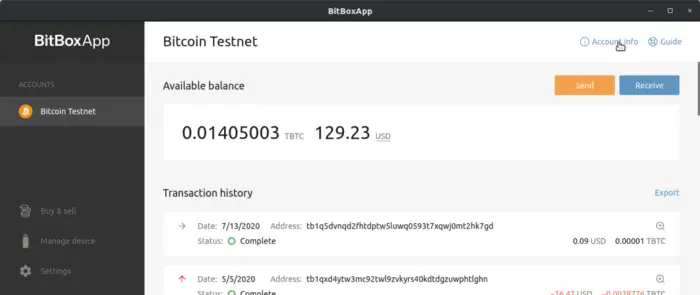
BitBox02 (BitBoxApp)

BitBox02 is a compact hardware wallet with a simple and well-structured companion app, making it suitable for beginners.

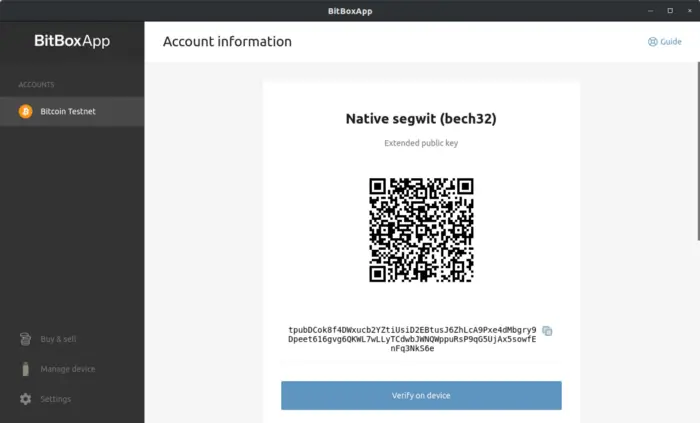
How to find the xPub key in BitBoxApp:

  1. Open the BitBoxApp and select your Bitcoin account.

  2. Open Account information.

  3. Copy the displayed extended public key (xPub).


Ledger (Ledger Live)

Ledger hardware wallets are widely used and beginner-friendly. The Ledger Live app allows you to manage your Bitcoin account and access advanced account details.

How to find the xPub key in Ledger Live:

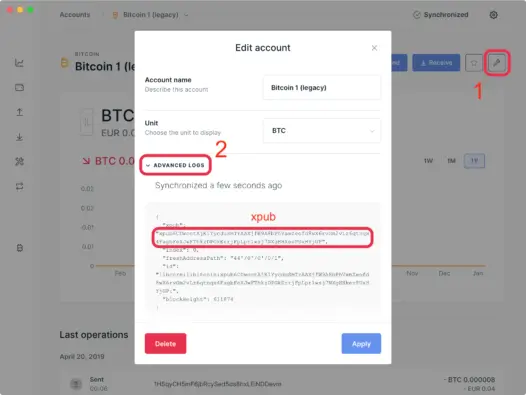
  1. Open Ledger Live and select your Bitcoin account.

  2. Click on the settings icon of the account.

  3. Open Advanced logs.

  4. Look for the entry starting with xpub… and copy it.

Trezor (Trezor Suite)

Trezor wallets focus on transparency and ease of use. Trezor Suite clearly shows all important account information.

How to find the xPub key in Trezor Suite:

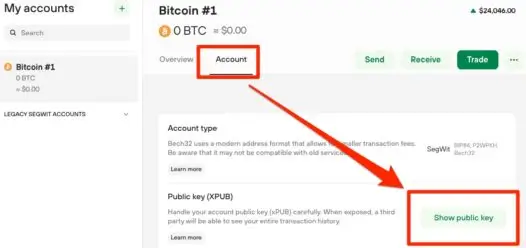
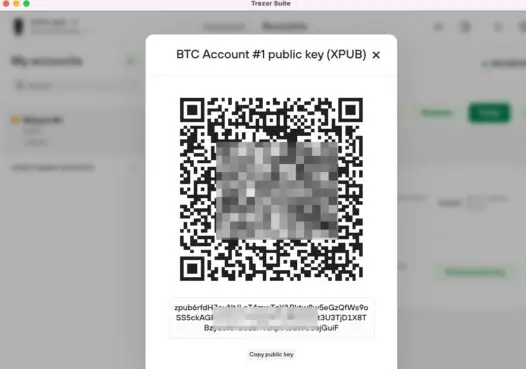
  1. Open Trezor Suite and select your Bitcoin account.

  2. Go to Account details.

  3. The xPub key is displayed and can be copied.

Software Wallets

Sparrow Wallet (Desktop)

Sparrow Wallet is a popular desktop wallet that combines a clean interface with powerful features, making it suitable for beginners and merchants alike.

How to find the xPub key in Sparrow Wallet:

  1. Open Sparrow Wallet and select your wallet.

  2. Click on Settings.

  3. Open the Keystore or Script section.

  4. The extended public key (xPub) is displayed and can be copied.

Specter Desktop

Specter Desktop is designed to guide users through Bitcoin wallet management, especially when using hardware wallets. It clearly displays account information, including the xPub key.

How to find the xPub key in Specter Desktop:

  1. Open Specter Desktop and select your wallet.

  2. Go to Wallet settings.

  3. Open the Addresses or Keys section.

  4. Copy the displayed xPub key.

Electrum (Desktop)

Electrum is one of the most widely used Bitcoin wallets and is well known for its reliability and simplicity.

How to find the xPub key in Electrum:

  1. Open your wallet in Electrum.

  2. Click on Wallet in the top menu.

  3. Select Information.

  4. The xPub key is shown directly and can be copied.

BlueWallet (Mobile)

BlueWallet is a simple and intuitive mobile wallet for iOS and Android, making it a good choice for beginners who prefer using their smartphone.

How to find the xPub key in BlueWallet:

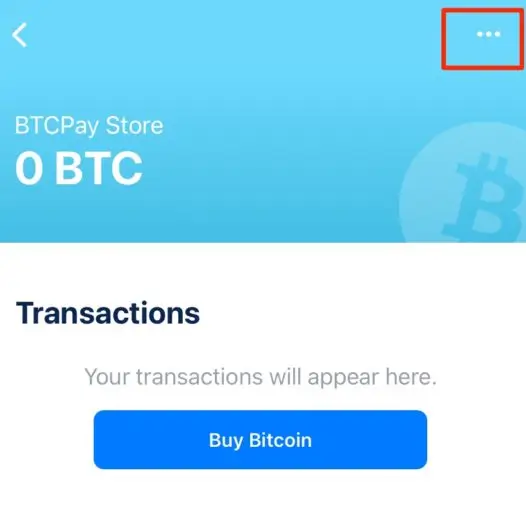
  1. Open the BlueWallet app and select your Bitcoin wallet.

  2. Tap on the settings icon.

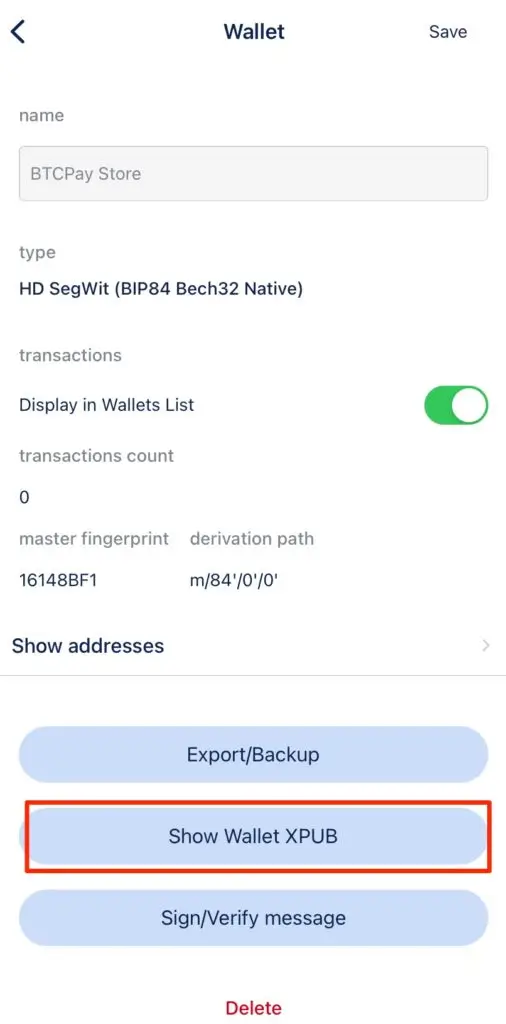
  3. Choose Show Wallet XPUB.

  4. Copy the xPub key or scan the QR code.

Conclusion

xPub keys allow merchants to receive Bitcoin on-chain payments directly in their own self-custodial wallet — securely and without intermediaries.

With Coinsnap:

  • Lightning payments go to your Lightning address

  • On-chain payments are derived from your xPub key

This setup gives you complete control, maximum flexibility, and a clean separation between Lightning and Bitcoin funds.

Paying Invoices with Bitcoin

Paying Invoices with Bitcoin

How your customers can easily pay their invoices in Bitcoin

Do you send invoices to your customers that have previously been paid by bank transfer, but now want to accept Bitcoin payments? With Coinsnap, your customers can pay their invoices using Bitcoin. There are two simple ways to do this:

  • Bitcoin Payment Link
  • Bitcoin Invoice Form

Both methods allow your customers to pay your invoices directly in Bitcoin. The main difference lies in how the payment process is initiated — and in the effort required on your side as the merchant.

With a Bitcoin Payment Link, your customer receives an individual payment URL, for example: 👉

https://pay-in-bitco.in/QZJIWg

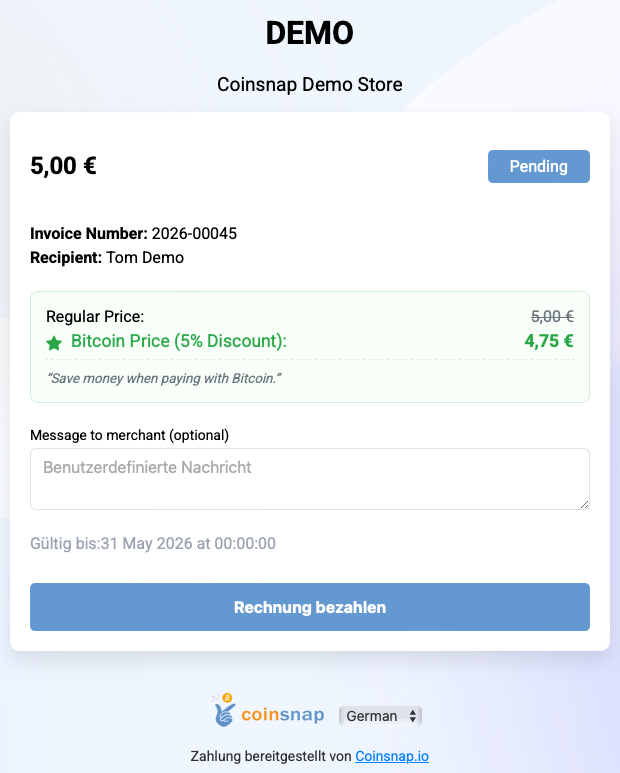
When the customer clicks the link, a payment page opens showing a “Pay Invoice” button.

At the moment of payment, the Euro amount is automatically converted into Bitcoin based on the current exchange rate, and a QR code is displayed for the customer to scan with their Bitcoin wallet.

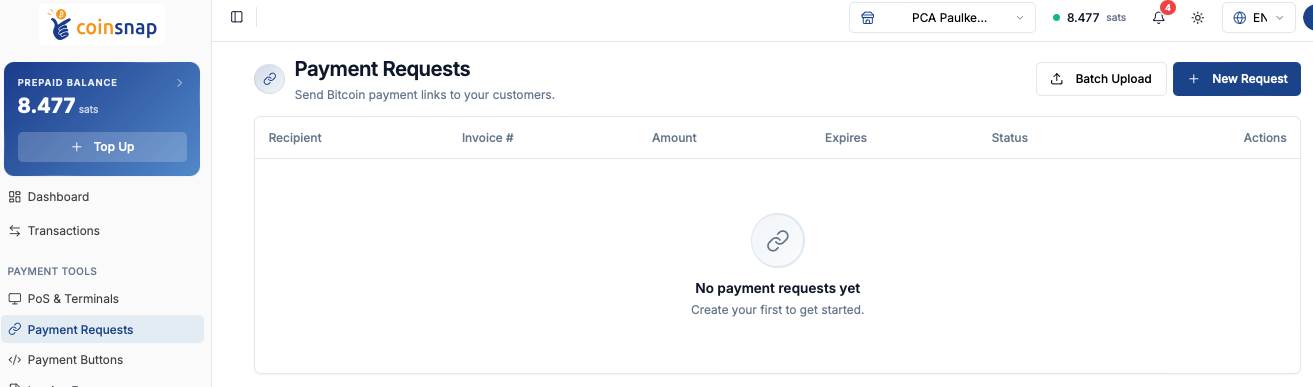
As the merchant, you generate the link directly in the Coinsnap backend under:
Menu → Pay Tools → Pay Link

You simply enter the invoice number, amount, and description. The system then generates a unique payment link that you can send to your customer.

In an upcoming update, you’ll also be able to upload a CSV file containing multiple invoices. Coinsnap will automatically generate the corresponding payment links — ideal for merchants who issue many invoices at once.

Advantages and disadvantages

Advantages:

  • Very convenient for the payer
  • Each payment is clearly linked to a specific invoice
  • Reduces errors or mismatched payments

Disadvantages:

  • More setup effort for the merchant (one link per invoice)
  • Less suitable for mass invoicing

Further Information: Coinsnap Payment Link

Bitcoin Invoice Form

With the Bitcoin Invoice Form, you provide a fixed link on your own website, for example: 👉
https://my-company.com/bitcoin

Your customer visits this page and enters the invoice details (invoice number, amount, name, etc.) — just like filling out an online banking form.

After completing the fields, they click “Pay the invoice with Bitcoin”, and the payment process begins automatically.

Benefits for merchants

The biggest advantage: you don’t need to create an individual link for each invoice.
You can simply print the URL of your Bitcoin invoice form directly on every invoice — next to your usual bank details.
That way, every customer has the option to pay you in Bitcoin at any time.

Technical implementation

The Bitcoin Invoice Form is available in two versions:

  • As a WordPress plugin – Coinsnap Bitcoin Invoice Form, compatible with both Coinsnap and BTCPay Server
  • As HTML code – easily embedded into any type of website

In the Coinsnap backend, go to:
Menu → Pay Tools → Invoice Form

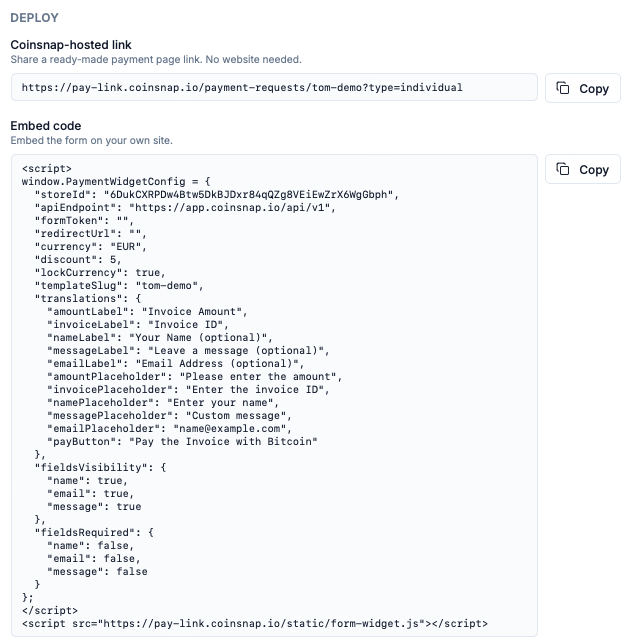
There, you can customize the field names and generate the HTML code to embed on your site.

Once added, your customers can pay invoices directly in Bitcoin — quickly and conveniently.

Advantages and disadvantages

Advantages:

  • No need to create separate links
  • Works for all customers automatically
  • Easy to integrate into existing invoicing processes

Disadvantages:

  • Customer must enter their own data (potential for input errors)
  • Less automatic payment assignment if data is incorrect

Further Information:


Recommendation

  • If you occasionally receive Bitcoin payments and want to send a personalized payment link when a customer requests it, the Bitcoin Payment Link is the best option.
  • If you want to offer Bitcoin as a standard payment option to all your customers without extra effort, choose the Bitcoin Invoice Form.

Both methods are excellent ways to give your customers — who previously paid via traditional bank transfer — a modern, transparent, and seamless way to pay invoices in Bitcoin.

Bitcoin Invoice Form: How to get bills paid with Bitcoin (on-chain & Lightning)

Paying bills with Bitcoin – why it matters now

Imagine you’re a tradesman and you’ve just completed a project. Your customer is satisfied, and you send them the invoice. Normally, you’d expect a traditional bank transfer. But this customer asks, “Can I pay the invoice with Bitcoin?”

Or maybe you run a small online shop. Your customers can currently only pay by bank transfer because integrating other payment methods is complicated. But the question is increasingly coming up: “Does this also work with Bitcoin?”

Coinsnap’s Bitcoin invoice form enables you to do just that: have invoices paid with Bitcoin directly on your website – simple, reliable, and without any media disruption.

Bills as usual – plus Bitcoin option

You issue your invoice as usual (services, IBAN, payment term). Additionally, you offer “Pay bill with Bitcoin” – e.g. at: yourdomain.com/bitcoin. There, your customers will find a form that’s just as intuitive to use as a classic online transfer form:

  • Invoice amount and currency (e.g. Euro)
  • Invoice number for unique assignment
  • Optional name and message

After clicking on “Pay invoice with Bitcoin”, a QR code will be displayed that can be paid with Bitcoin on-chain or with Lightning.

Practical examples – where the Bitcoin invoice form makes sense

The Bitcoin invoice form is suitable not only for traditional service providers, but for a wide range of industries.

Online shops

Not every online store can easily integrate Bitcoin payments. The invoice form offers a simple solution: You continue to offer payment on account – the customer can then freely choose whether to pay the invoice by bank transfer or directly with Bitcoin.

Contractors & service providers

Whether it’s a painter, electrician, or IT consultant, many service providers issue invoices for their services – either as an advance payment or after the job is completed. With the Bitcoin invoice form, your customers can now also pay these invoices with Bitcoin, without you having to change your existing accounting system.

Hotels & Restaurants

Invoicing is also common in the hotel and restaurant industry – whether as a deposit or a final invoice for overnight stays, events, or catering. With the additional Bitcoin option, guests can pay their bill directly in Bitcoin, giving them the peace of mind of using a modern payment method.

Goods seller

Whether you’re a wholesaler, a small shop, or a sole proprietor, the form can be used anywhere that sells goods and issues invoices. Merchants who already work with international customers in particular benefit from the fact that Bitcoin payments are fast, inexpensive, and borderless.

Fair Bitcoin conversion at the time of payment

A major advantage of the Bitcoin invoice form is the dynamic conversion: the euro amount is only converted into Bitcoin at the time of payment – not when the invoice is created.

This means for you and your customers:

  • Regardless of when payment is made within the payment period, the Bitcoin amount is always current.
  • Volatility plays no role in settlement.

The payment will be credited instantly to your Lightning wallet. If you wish, you can automatically convert the amount into euros and have it paid out to your bank account. (see below)

  • Install plugin
  • Connect either to your Coinsnap account or directly to your own BTCPay server
  • Customize the form to your requirements
  • Insert anywhere using a shortcode

Easy integration of the Bitcoin invoice form (HTML & WordPress)

1. HTML version (for each website type)

  • Login to the Coinsnap dashboard
  • Under Payment Tools → Invoice Form configure
  • Generate HTML code
  • Insert on your own website

This is how easy it is to integrate a Bitcoin payment option into any kind of website.

2. WordPress plugin

If you run your site with WordPress, the Coinsnap Bitcoin Invoice Form plugin is available for you.

  • Install plugin
  • Connect either to your Coinsnap account or directly to your own BTCPay server
  • Customize the form to your requirements
  • Insert anywhere using a shortcode

Particularly important: The form is displayed directly on your website. Your customers are not redirected to external sites – a crucial factor for trust and credibility.

Extra feature: Discount when paying invoices via Bitcoin – more conversion, fewer fees

An exciting additional feature is the Bitcoin discount function. If you want to encourage your customers to pay with Bitcoin, you can, for example, offer a 5% discount.

The form automatically calculates the reduced amount and displays it to the payer. This creates a real incentive for payments in Bitcoin!

Optional: Receive Bitcoin payments in euros – this keeps your accounting clean

If you want to accept payments in Bitcoin but do not want to keep Bitcoin in your accounting, you can automatically convert incoming Bitcoin invoice amounts directly into euros (e.g. with Coinsnap + Bringin or DFX) and credit them to your company account.

Further information: Coinsnap + Bringin

FAQ

Does Coinsnap accept bill payments via Bitcoin?

Yes. With Coinsnap Bitcoin invoice form invoices can be On-chain and via Lightning pay directly on your website.

Does the Bitcoin invoice form also work in WordPress?

Yes. Coinsnap Invoice Form Plugin creates a shortcode you can place anywhere on your WordPress website.

How is the Bitcoin amount calculated?

The EUR amount is converted in Bitcoin at the time of payment (rate lock).

Can I receive EUR payouts?

Yes, e.g. with Bringin (immediately in EUR/IBAN) or DFX (periodic).

Conclusion

With Coinsnap’s Bitcoin invoice form, you can accept invoice payments via Bitcoin professionally, transparently, and directly on your website.

  • HTML version: universally applicable, Coinsnap account required
  • WordPress plugin: usable with Coinsnap or your own BTCPay Server
  • Practical relevance: from online shops to craftsmen to hotels and retailers – wherever invoices are written, Bitcoin can now be accepted as a payment method.

Combined with the Bitcoin discount feature, this creates an attractive offer that not only builds trust but can also actively motivate customers to pay in Bitcoin.

Try the Coinsnap Bitcoin invoice form yourself here.

Accept Bitcoin & Get Paid to Your Bank Account (No Bitcoin Handling)

You want to accept Bitcoin, but prfer to get paid to your bank account in euros? If you’re curious about offering Bitcoin at checkout—but have zero interest in managing wallets, volatility, or crypto accounting—this guide is for you.

With Coinsnap, your customers can pay in Bitcoin while you choose how you get paid:

  • directly to your bank account in euros or dollars, or
  • to a Lightning or on-chain Bitcoin wallet if you prefer.

In this post, we focus on the simplest path for non‑crypto‑native businesses: accepting Bitcoin while receiving fiat directly to your bank account. You’ll learn why bank settlement is appealing, how it works with Coinsnap, and which payout partner—Bringin, Strike, or DFX—is right for you.

Can Merchants Accept Bitcoin and Get Paid in Euros?

Yes. With Coinsnap, customers pay in Bitcoin while merchants receive EUR or USD directly to their bank account via regulated settlement partners such as Bringin, Strike, or DFX—without holding or managing Bitcoin.

Why Merchants Settle Bitcoin Payments to a Bank Account

Many businesses want access to new customers without changing how finance works day to day. Bank settlement keeps everything familiar:

  • Sales arrive as euros or dollars on your statement
  • No Bitcoin custody or wallet management
  • No exposure to price volatility
  • Easier bookkeeping and reconciliation

When you choose fiat settlement, Coinsnap routes payments through a regulated partner that handles conversion and banking rails. As with any fiat service, KYB/KYC onboarding is required by the partner—not by Coinsnap.

Coinsnap itself never holds your funds. You decide whether payments go to a Lightning wallet, an on‑chain wallet, or a bank account via a settlement partner.

Bitcoin to Bank Account with Coinsnap: How It Works

BITCOIN TO BANK ACCOUNT WITH COINSNAP: HOW IT WORKS

Coinsnap does not perform Bitcoin‑to‑fiat conversion directly. Instead, it integrates with Bringin, Strike, and DFX.

The flow is simple:

  1. Customers pay in Bitcoin (Lightning or on‑chain)
  2. Coinsnap routes the payment to your chosen partner
  3. The partner converts Bitcoin to fiat
  4. Funds are credited to your bank account—often within minutes

You never touch Bitcoin unless you want to.

How to Accept Bitcoin and Receive Fiat to Your Bank

  1. Install Coinsnap in your shop system
  2. Choose a bank settlement partner (Bringin, Strike, or DFX)
  3. Complete KYB/KYC with the partner
  4. Enter your payout details in Coinsnap
  5. Run a test payment and confirm bank credit

Option 1: Bringin — Accept Bitcoin, Receive Euros via SEPA

BRINGIN — ACCEPT BITCOIN, RECEIVE EUROS VIA SEPA

Bringin is ideal for EU merchants who want fast, simple euro payouts.

  • Lightning payments are forwarded to a Bringin-issued Lightning address
  • Funds are converted instantly and credited to a personal IBAN (vIBAN)
  • Withdraw to your bank via SEPA Instant

Key points:

  • ~1% withdrawal fee
  • Starter limit around €10,000/month (expandable)
  • Payouts only to bank accounts in the same legal name

Best for merchants who want a clean “accept Bitcoin, receive euros” setup with minimal moving parts.

Option 2: Strike — Global Reach with Optional BTC Holding

Strike — Global Reach with Optional BTC Holding


Strike combines a Lightning address with flexible fiat withdrawals.

  • Incoming Lightning payments land in your Strike wallet
  • You decide whether to hold BTC or convert to fiat
  • Withdraw to your bank in supported countries

Why choose Strike:

  • Broad international availability (especially strong in the US)
  • Dual wallet model (BTC + cash)
  • Flexible conversion timing

Ideal for global merchants or businesses that want to keep some Bitcoin while converting the rest.

Option 3: DFX — Per‑Transaction Settlement in EUR or CHF

DFX — Per‑Transaction Settlement in EUR or CHF

DFX converts and settles each transaction individually.

  • Every Bitcoin payment becomes a separate EUR or CHF bank credit
  • Works with SEPA‑reachable accounts across the EU, UK, and Switzerland

Highlights:

  • Clear audit trail for accounting
  • Transparent compliance thresholds
  • Strong choice for Switzerland and Europe

Perfect for finance teams that value one‑to‑one reconciliation.

Bringin vs. Strike vs. DFX

Partner Region Fiat Settlement Style Best For
Bringin EU / SEPA EUR vIBAN → bank Simple euro payouts
Strike Global Local Wallet → bank Flexibility & reach
DFX EU / CH / UK EUR / CHF Per transaction Accounting clarity

How to Choose the Right Bitcoin‑to‑Bank Partner

  • EU merchants: Bringin or DFX
  • US & global businesses: Strike
  • Zero BTC exposure: Bank settlement only
  • Some BTC holding: Strike or wallet payouts

Coinsnap doesn’t lock you in. Many merchants adjust their payout strategy as demand grows.

Key Takeaways

  • Accept Bitcoin without changing your back office
  • Eliminate volatility by settling directly to your bank
  • Choose the partner that fits your region and accounting needs
  • Test once, document the process, and scale confidently

Accepting Bitcoin should expand your market—not complicate your month‑end.

With Coinsnap and the right settlement partner, Bitcoin payments can be as simple as cards or PayPal.

Frequently Asked Questions (FAQ)

Can I accept Bitcoin without holding any Bitcoin?

Yes. With Coinsnap, you can route all payouts directly to your bank account via Bringin, Strike, or DFX. Customers pay in Bitcoin, while you receive euros or dollars—without ever holding BTC.

Do I need KYC or KYB to receive bank payouts?

Yes. While Coinsnap itself does not require KYC for payouts to your own Bitcoin or Lightning wallets, bank payouts require KYB/KYC because Bringin, Strike, and DFX operate on regulated fiat rails.

How fast do Bitcoin payments settle to my bank account?

  • Lightning payments: Near-instant on the Bitcoin side
  • Bank settlement: Same day to a few business days, depending on the partner and your bank (SEPA Instant is often available in the EU)

What fees should merchants expect?

  • Coinsnap: 1% fee per transaction
  • Settlement partners: Each partner publishes its own conversion and payout fees (for example, Bringin charges around 1% on withdrawals)

Always review the exact fee schedule during partner onboarding.

Which countries are supported for Bitcoin-to-bank payouts?

  • Europe / SEPA: Bringin, DFX
  • Switzerland: DFX
  • United States & global regions: Strike (availability varies by country)

Availability depends on your business type and local regulations.

Can I split payouts between Bitcoin and fiat?

Coinsnap does not support an automatic split. However, you can receive payments to a Lightning or on-chain wallet and later convert part of your Bitcoin through a third-party exchange or broker.

Is accepting Bitcoin more complex than cards or PayPal?

No. With Coinsnap, Bitcoin checkout integrates directly into your existing shop system. When using bank settlement, reconciliation looks similar to traditional payment methods—often simpler due to lower fees and fewer chargebacks.

Ready to test Bitcoin checkout without changing your finance setup?

Install Coinsnap, connect a bank payout partner, and run a live test in minutes.

WooCommerce Bitcoin Cash-Out (Simple Introduction)

WooCommerce Bitcoin Cash-Out (Simple Introduction)

Many WooCommerce shops want the reach and tiny fees of Bitcoin and Lightning at checkout, but still need money to land in the bank in euros. That keeps cash flow smooth, bookkeeping simple, and avoids price swings.

This guide explains your payout choices in plain English and shows easy ways to set them up in WooCommerce — so you can go live fast.

Why settling to fiat matters

Some stores don’t want to keep Bitcoin on the books because it adds extra accounting work. Others need local currency to pay suppliers, salaries and taxes. And some prefer not to carry price risk if Bitcoin moves after a sale.

Settling to fiat at, or soon after, a Bitcoin payment solves all three problems: clean books, predictable cash flow, and no surprise losses from exchange-rate swings.

Your WooCommerce Bitcoin cash-out options

There are several practical ways to turn WooCommerce Bitcoin sales into euros or other currencies in your bank. Here are the most common ones:

1) Exchange to bank (sell BTC, withdraw to IBAN)

This is the “sell on an exchange, withdraw to your bank” route. You receive Bitcoin, send it to a trusted exchange account, sell it for EUR/USD/GBP, and withdraw to your bank.

It usually has the lowest fees but takes a little time and requires an exchange account with ID checks.

2) Peer-to-peer sales

You sell directly to a buyer on a marketplace and agree a bank transfer or another payment method.

It can be fast and flexible, but you must use platforms with escrow and good reputation systems, and you’ll need to verify you’ve been paid before releasing the Bitcoin.

3) Bitcoin ATMs (instant cash, higher fees)

You send Bitcoin to a Bitcoin ATM and receive banknotes.

It’s the fastest way to get physical cash, but fees are usually much higher than other routes and daily limits may apply.

4) Plugins for Bitcoin Cash-out directly to your IBAN

There’s a very convenient option that feels like option 1 but without moving coins yourself: some plugins connect your checkout to a service that auto-converts Lightning or on-chain payments into euros and credits them to an account in your name.

A popular example is Coinsnap together with Bringin. Customers pay in Bitcoin, you see euros arrive—instantly—without touching an exchange screen.

What’s best for you?

Peer-to-peer trades and Bitcoin ATMs aren’t really practical for Woo merchants:

P2P deals demand manual vetting, escrow/dispute handling and carry fraud risk—none of which scales or integrates with orders or accounting.

Bitcoin ATMs are scarce, often fee-heavy, have low limits, and only dispense cash—so you still end up with reconciliation headaches and no automated Bitcoin cash out flow.

Bitcoin cash-out methods compared

The most popular Bitcoin cash-out options for WooCommerce merchants

(Click here or on spreadsheet image to download Excel)

Which way should you choose for cashing out Bitcoin?

Pick the exchange route if you want low fees and can wait for a bank transfer. If you want the easiest life inside WooCommerce, use a plugin that automates the euro payout for you and keeps the checkout fast—Coinsnap + Bringin is the simplest example.

If you like “set and forget,” Coinsnap with Bringin is hard to beat. Coinsnap handles the Bitcoin and Lightning checkout, Bringin converts Lightning payments into euros and credits an IBAN in your name, in seconds. You can also use Coinsnap with DFX if you prefer to work with a Bitcoin exchange.

If you prefer a single provider that does everything from acceptance to daily bank payouts, look at CoinGate or OpenNode. You’ll open an account, pass standard ID checks for businesses, install their WooCommerce plugin, and choose your payout settings. Both support Bitcoin; CoinGate also offers many payout currencies and extra merchant tools.

Bitcoin cash-out: exchanges vs. WooCommerce plugins—what to know

Bitcoin exchange

Selling on a centralized exchange is the classic route: pick a regulated platform that serves your country, create an account, pass KYC, link your bank, send in your Bitcoin, sell it for EUR/GBP/USD, then withdraw to your account. It’s familiar and flexible, but it’s a separate workflow from your shop.

Know the costs and timing. Exchanges charge a trading fee when you sell and a withdrawal fee when you move money to your bank. Payouts aren’t instant—bank transfers typically take 1–5 business days.

WooCommerce Bitcoin cash-out plugins

If you want less manual work, specialized WooCommerce Bitcoin fiat settlement plugins can handle conversion and payouts on a schedule, so cash flow and reconciliation stay simple.

A good example is the Coinsnap + Bringin combination: Install the Coinsnap for WooCommerce plugin, open a Bringin account, and paste your Bringin Lightning address into Coinsnap. From then on, Lightning payments at checkout are auto-converted to euros and credited instantly to your personal IBAN at Bringin—no extra steps in your shop.

Plan for costs and flow. Typical fees are Coinsnap (1%) plus Bringin (1% when you withdraw to your bank). Funds hit your Bringin IBAN immediately; bank withdrawals use SEPA Instant in most cases.

Coinsnap Bringin setup in a nutshell

The steps are straightforward. Install the plugin in WordPress, switch it on in WooCommerce → Settings → Payments, and paste the keys or address the provider gives you. If you choose Coinsnap with Bringin, you add your Bringin Lightning address in the Coinsnap dashboard and you’re done—run a €1 Lightning test and watch euros hit your account. If you choose an exchange or a different provider, follow their connect flow and do the same €1 test.

If you need a detailed installation guide, read this article!

How to ensure clean accounting?

Record each order at the euro amount shown at payment time. Keep the Bitcoin amount, the exchange rate used, the order number and the transaction ID or Lightning payment hash. If you use automatic euro payouts, your books just show normal bank income and you don’t carry Bitcoin on the balance sheet.

If you keep some Bitcoin and convert later, you’ll track any gain or loss between the day of sale and the day you convert. To make life easy, Coinsnap connects to CoinTracking, which pulls in your transactions and produces tax-ready reports.

This is general information, not tax advice. Check local rules with your accountant!

WooCommerce Bitcoin cash-outs: compliance and refund essentials

Services that pay out to banks will ask for standard ID checks and run routine compliance screening on payouts. If money goes straight to your own wallet first, there are usually no ID checks at checkout, but you still follow local rules for invoices, VAT and data protection.

Bitcoin and Lightning have no chargebacks, so refunds are simply new payments you send back to the customer. Publish a clear refund policy, ask customers for a fresh address or Lightning invoice, and note the details in your records.

Quick answers for your questions

Can WooCommerce settle Bitcoin to my bank?

Yes. Use a plugin that offers bank payouts, or pair Coinsnap with Bringin to auto-convert Bitcoin Lightning payments into euros.

How long does a Bitcoin cash-out take?

On a centralized exchange, the sale goes through right away, but getting the cash to your bank takes 1–5 business days. With Coinsnap + Bringin, Bitcoin Lightning payments are auto-converted to euros and credited to your Bringin IBAN immediately; withdrawals via SEPA Instant typically complete in seconds.

Does Lightning work with bank payouts?

Yes. With Coinsnap and Bringin, Lightning payments can be turned into euros automatically. Other providers can settle daily.

Do I need to verify my identity?

For bank payouts, yes. For pure Bitcoin to your own wallet, usually not. If you later convert to fiat, the off-ramp will require ID.

What is the easiest path to euros from Lightning sales?

Coinsnap with Bringin: add your Bringin Lightning address in Coinsnap and euros show up in your IBAN, instantly.

Bottom line: choose the cash-out flow that matches your shop, not someone else’s

If you only cash out now and then, a reputable exchange is perfectly fine. You’ll likely get competitive rates, full control over when you sell, and a familiar “sell → withdraw to bank” flow. The trade-off is manual work: you move funds yourself and reconcile orders separately.

If you want daily, no-friction operations, plugin-based cash-out wins. Solutions wired into WooCommerce (e.g., Coinsnap + Bringin or gateways like CoinGate/OpenNode) turn each Bitcoin checkout into fiat with minimal effort, giving faster cash flow and cleaner accounting.

Are you ready to install WooCommerce Bitcoin cash-out today?

Learn more about Bitcoin Lightning cash-out

If you want to understand Bitcoin cash-out even better, read this blog:
Read the blog

Why is Coinsnap + Bringin perfect for you?

Coinsnap + Bringin is the easiest way to cash out Bitcoin from your WooCommerce store to your euro bank account. Bringin provides an IBAN in your name that receives your Lightning payments instantly.
How it works

Register your Coinsnap account

To start Bitcoin cash-out from your Woo store, just install the Coinsnap for WooCommerce plugin, enter your Bringin wallet address, and activate the payment method in WooCommerce.

Get a Coinsnap account

Register now

WooCommerce Bitcoin Fiat Settlement: Deep Dive for Merchants (2025)

WooCommerce Bitcoin Fiat Settlement: Deep Dive for Merchants (2025)

Many WooCommerce stores want the reach and low fees of Bitcoin/Lightning at checkout but still need bank-ready EUR/USD/GBP for cash flow, simpler accounting, and lower volatility risk. So they are looking for a practical WooCommerce Bitcoin fiat settlement solution.

In this guide for merchants already familiar with Bitcoin, wallets, and Lightning, we’ll outline the three practical paths at a glance—self-custody only (keep BTC), automatic fiat settlement (instant or daily bank payouts), and a hybrid approach (keep some BTC, settle the rest).

You’ll get clear options, a comparison of fees, payout speed, KYC/KYB, Lightning support, and setup steps to go live fast.

Why does fiat settlement matter for Woo merchants?

There are three main reasons why merchants prefer fiat settlement:

Accounting / Management

If you keep Bitcoin on your books, you must track cost basis, FX gains/losses, and reconcile on-chain/Lightning records—a burden most merchants avoid.

Liquidity / Cashflow

Stores often need euros to pay suppliers, payroll, and taxes; automatic settlement delivers cash flow and liquidity where it’s needed.

Volatility Risk Neutralising

Fiat settlement neutralises price volatility: converting at payment time removes risk.

It simplifies compliance, reduces friction with accountants, and keeps forecasts predictable.

Fiat settlement 101 (custody models & trade-offs)

Before choosing a payout route, understand the two custody models: custodial processors and non-custodial + off-ramp setups.

Custodial processors

Platforms like CoinGate, BitPay, OpenNode, and NOWPayments require KYC/KYB and charge fees but handle payouts and offer broad fiat rails.

Non-custodial + off-ramp setups

Solutions like Coinsnap + Bringin or DFX let you accept Bitcoin via Lightning or on-chain, auto-converting to EUR or off-ramping later.

When to use which (quick decision aid)

Zero BTC on books

Use Coinsnap + Bringin for Lightning → instant EUR credit to IBAN, or custodial gateways (BitPay, CoinGate, OpenNode) for daily payouts.

You want choice

Choose a hybrid model: accept Bitcoin via Coinsnap, keep some BTC, and off-ramp through Bringin or DFX.

Maximum control

Opt for self-custody + periodic OTC/DFX exchange—ideal for merchants comfortable handling their own wallets and bookkeeping.

The best WooCommerce Bitcoin Fiat Settlement plugins

Here are six proven solutions from our plugin comparison:

  • Coinsnap + Bringin (Lightning → EUR): Non-custodial checkout, instant EUR IBAN, supports on-chain.
  • Coinsnap + DFX: Keep BTC, off-ramp later; flexible hybrid treasury.
  • CoinGate: Custodial Lightning + on-chain with fiat settlement (EUR/USD/GBP).
  • BitPay: Enterprise-grade BTC gateway; KYB required; multiple currencies.
  • OpenNode: Bitcoin-only, KYB, instant or daily fiat payouts.
  • NOWPayments: Multi-coin, no Lightning; fiat via partners; KYB for fiat.

Detailed comparison of the most important features (decision matrix)


Click here to download the Excel comparison
.

How does it work? Setup guide

1) Coinsnap + Bringin (fastest path to EUR)

  1. Install Coinsnap for WooCommerce and activate it.
  2. Add store and Lightning address in Coinsnap.
  3. Open Bringin account (KYC) and claim your Lightning address.
  4. Paste Bringin address into Coinsnap → Wallet.
  5. Enable Coinsnap under Woo → Settings → Payments; test €1 order.

→ Result: instant EUR credit to IBAN.

Installation guide.

2) Coinsnap + DFX (hybrid treasury)

  1. Install Coinsnap and connect your Lightning wallet.
  2. Create DFX account and connect settlement flow.
  3. Periodically convert BTC to EUR/USD/CHF and withdraw.

→ Result: Keep BTC until you off-ramp.

3) CoinGate / BitPay / OpenNode (custodial)

  1. Create merchant account (KYB/KYC).
  2. Install Woo plugin, paste API credentials.
  3. Select Lightning + on-chain, choose fiat currency, set payout schedule.
  4. Test and verify order mapping.

Clean Books, No Surprises: Practical Steps for Safe Accounting

Revenue recognition

Record each sale at the fiat value at payment time. Keep BTC amount, rate, fiat value, order ID, and TXID/payment hash for full auditability.

If you use fiat settlement

With Coinsnap + Bringin or custodial gateways, your ledger shows EUR/USD/GBP received; you don’t carry BTC inventory. This simplifies VAT and removes FX tracking.

If you run a hybrid/self-custody model

Record revenue at fiat value, then track FX gains/losses between sale and conversion. Use a fixed off-ramp policy to keep forecasts clean.

Coinsnap + CoinTracking automation

Connect Coinsnap to CoinTracking to automate imports, calculate P&L, and generate tax-ready reports.

This is general information, not tax advice—consult your accountant.

Compliance & refunds

Custodial gateways and off-ramps (bank payouts) require KYB/KYC, AML, and refund policies.
Non-custodial flows (BTC/LN → wallet) have no checkout KYB but still need VAT, consumer rights, and data compliance.

Remember: Bitcoin/Lightning payments have no chargebacks. Refunds are new payments—always verify address/invoice and log full details
(order ID, fiat rate, TXIDs).

FAQ

Can WooCommerce settle Bitcoin to my bank?

Yes—use CoinGate, BitPay, OpenNode, or non-custodial Coinsnap with Bringin/DFX.

Is Lightning compatible with fiat settlement?

Yes—Lightning receipts can be auto-converted via Coinsnap + Bringin or settled daily via custodial gateways.

Do I need KYB?

Yes for custodial/fiat providers; no for pure BTC/LN to your wallet (Coinsnap only).

What’s the easiest way to get EUR from Lightning sales?

Coinsnap + Bringin: paste your Lightning address and receive EUR instantly in your IBAN.

What is realised vs unrealised P&L?

Realised P&L: profit/loss on conversion to fiat.
Unrealised P&L: paper gains/losses while holding BTC.

What is AML/sanctions screening?

Processor compliance checks that verify identity and block prohibited transactions. Required for fiat off-ramps; not typical for non-custodial flows.

Get started with WooCommerce Bitcoin Fiat Settlement

The Best Plugins for WooCommerce Bitcoin Payment with BTCPay Server

The Best Plugins for WooCommerce Bitcoin and Lightning Payment with BTCPay Server

This guide is for WooCommerce merchants who already operate a
BTCPay Server and want to accept Bitcoin payments in their Woo store.
You’ll learn how to connect BTCPay Server with WooCommerce and offer both
on-chain and Lightning payments.

We’ll explain why you should enable Lightning alongside on-chain,
present the two best integration routes, and show step-by-step installation
instructions for both. By the end, you’ll be able to
enable Bitcoin & Lightning payments in under an hour,
even without coding experience.

Why use Bitcoin payment with BTCPay instead of a commercial provider?

Running your own BTCPay Server gives you full sovereignty and control:
no platform fees, no KYC/KYB in a self-custody setup,
complete control over data, uptime, and both on-chain and
Lightning payment options.

You also avoid costs of credit cards, PayPal, Stripe, or commercial Bitcoin
processors like BitPay and CoinGate.
For privacy-focused Woo merchants who value independence and want direct
control from checkout to wallet, BTCPay is the first choice.

What plugins connect BTCPay to WooCommerce?

There are two official plugins available:

BTCPay Greenfield for WooCommerce

The official BTCPay Greenfield plugin is the standard option for merchants
who operate or share a BTCPay Server.

How it works

  • Connects WooCommerce directly to your BTCPay server.
  • All payment methods configured on the server appear automatically in your shop.
  • By default supports Bitcoin on-chain payments directly to your wallet.
  • You can also add Lightning payments, though this requires
    running and maintaining your own Lightning node (channel management, liquidity).
  • Additional coins (e.g. USDT) are supported via BTCPay plugins.

Checkout in WooCommerce: BTCPay appears as a payment option.
The customer selects it, scans a QR code, and chooses on-chain or Lightning.

Tip: In WooCommerce → Payments, label the option clearly
(e.g. “BTC / Lightning”) instead of “BTCPay,” which customers might not recognize.

Coinsnap for WooCommerce

The Coinsnap plugin integrates BTCPay Server but uses Coinsnap’s
Lightning infrastructure.
It lets you accept Lightning payments without running your own node.

How it works

  • Connects WooCommerce and your BTCPay Server for seamless Lightning checkout.
  • Instant Lightning payouts to your chosen wallet.
  • Also supports on-chain Bitcoin through your BTCPay Server wallet.

Two ways – one checkout

  1. Run on-chain through your BTCPay wallet.
  2. Run Lightning via Coinsnap’s managed Lightning setup.

Customers can choose on-chain or Lightning at checkout,
improving clarity and conversion.

Bonus feature – Bitcoin Discount:
Offer a percentage discount (e.g. 5%) for Bitcoin payments.
It’s applied automatically at checkout, incentivising BTC use and
reducing your payment-provider fees.

Overview and comparison: BTCPay Greenfield vs Coinsnap

(Click to download Excel spreadsheet)

Can I also accept Lightning payments with BTCPay?

Yes, there are two options:

  1. Your own Lightning node inside BTCPay Server.
  2. BTCPay Server + Coinsnap (no Lightning node required).

Why do I need Lightning for WooCommerce?

Lightning offers instant settlement, minimal fees, and a “scan & pay” checkout.
It’s perfect for everyday carts under €150, boosting conversion and reducing costs.

Merchant survey (14 stores):

  1. Under €150: ~⅔ Lightning, ~⅓ on-chain.
  2. €150–€1,000: ~⅓ Lightning, ~⅔ on-chain.
  3. Over €1,000: Mostly on-chain.

Without Lightning, you lose conversions on smaller baskets.
Read full survey.

Which is better – BTCPay Server + Lightning Node or BTCPay Server + Coinsnap?

BTCPay Server + your own Lightning node

Maximum autonomy but requires maintenance
(channel balancing, routing, backups, updates).
Best for teams with DevOps skills who want full control.

BTCPay Server + Coinsnap (Managed Lightning)

No maintenance, instant Lightning setup,
and an integrated discount tool for conversion boosts.
Best for merchants wanting a reliable, no-node Lightning option.

How do I install Bitcoin Lightning payment in WooCommerce?

BTCPay Greenfield – Quick Setup

  1. In WordPress: Plugins → Add → search BTCPay for WooCommerce (Greenfield), install & activate.
  2. In BTCPay: Store → API Keys → Create Greenfield API key, save it.
  3. In WooCommerce: Settings → Payments → Enable BTCPay → Enter server URL, store ID, API key.
  4. Enable on-chain (and Lightning if running your own node).
  5. Test €1 transaction and verify order status.

Step-by-step installation guide

Coinsnap for WooCommerce – Quick Setup

  1. Plugins → Add → search Coinsnap, install & activate.
  2. Connect BTCPay URL and create API key.
  3. Set Bitcoin discount (e.g. 5%).
  4. Activate in Woo → Settings → Payments (“Lightning Payment”).
  5. Test €1 Lightning order.

Step-by-step installation guide

Which payment methods can I offer with BTCPay & WooCommerce?

  1. BTCPay On-Chain only: Best for high-value carts and maximum autonomy.
  2. BTCPay On-Chain + Lightning: Full control with higher maintenance effort.
  3. Coinsnap Lightning + optional BTCPay On-Chain: Fast Lightning for everyday orders, on-chain for large ones.

FAQ

Does WooCommerce accept Bitcoin?

No—natively it doesn’t. Use BTCPay Greenfield or Coinsnap plugins.

Can I add Bitcoin Lightning payment with BTCPay Server to WooCommerce?

Yes—install BTCPay Greenfield (own node) or Coinsnap (managed Lightning).

What is the best plugin?

BTCPay Greenfield for full control, or Coinsnap for the fastest, node-free Lightning setup.

Is WooCommerce Bitcoin Lightning payment via BTCPay Server free?

Yes for merchants—BTCPay has no platform fees. Buyers pay miner fees. Managed services may add small processing fees.

How do I set up a BTCPay wallet?

In BTCPay: Store → Settings → Wallet → Setup → Create new wallet or connect existing hardware wallet (recommended).

How do I get a Lightning wallet?

See: How do I get a Lightning wallet?

Summary: What’s the best choice for me?

If you have developer expertise, use BTCPay Greenfield + your own node
for maximum control.
If not, BTCPay + Coinsnap is ideal — managed Lightning means
no node maintenance and a built-in Bitcoin Discount feature to boost conversions.

  1. BTCPay On-Chain only: maximum autonomy.
  2. BTCPay On-Chain + Lightning: complete control, higher effort.
  3. Coinsnap Lightning + optional On-Chain: best of both worlds.

Are you ready to offer WooCommerce Bitcoin Lightning Payment with your BTCPay Server?

Self-Host BTCPay Server for WooCommerce (Complete 2025 Guide)

Self-Host BTCPay Server for WooCommerce (Complete 2025 Guide)

This guide shows you—step by step—how to use your BTCPay Server for WooCommerce Bitcoin payments and WooCommerce Lightning payments, and how to connect your BTCpay Server to WooCommerce easily.

We’ll cover why BTCPay is great for self-hosted bitcoin payments, how to deploy it, for whom and for which business cases WooCommerce Lightning payment by Coinsnap might be the way to go, plus best practices, compliance/accounting basics, and troubleshooting.

Content  show 

Why BTCPay Server for WooCommerce Bitcoin and WooCommerce Lightning payments?

BTCPay Server is the leading, most popular open-source, self-hosted Bitcoin payment processor. If you have one, you keep all the keys and data, pay no platform fee, and can accept both on-chain BTC and Lightning from any source, and of course from your WooCommerce store, too.

Some Woo store owners want to offer WooCommerce Bitcoin with their BTCPay Server, because unlike custodial Bitcoin payment providers, a self-hosted BTCPay Server keeps them out of third-party onboarding: there’s no KYB/KYC to accept BTC/Lightning to their own wallet—they go live with keys they control.

Also, with no processor caps or holds, their cash flow scales freely (whether €200 or €200,000+) and settles instantly.

And, last, but not least, they are not bound by any provider category bans—they can basically run any kind of business, so long as it isn’t illegal in their home jurisdiction. As all merchants, they still must meet local legal, tax, and consumer obligations (and any later fiat off-ramp may require KYC).

So for pure Bitcoin/Lightning, your own BTCPay Server maximizes sovereignty, speed, and freedom.

What is a Self-hosted BTCPay Server?

self-hosted BTCPay Server is simply your own BTCPay instance running on a web server (where you installed it).

The server provides the user account, storage, and compute; BTCPay then runs your Bitcoin (and optionally Lightning, see below) stack, creates invoices, and talks to your store—without a third-party processor.

You keep the keys, data, and configuration, and you’re responsible for uptime, updates, and security; different hosts can provide the underlying web space, but it remains your BTCPay Server.

You can deploy BTCPay Server on any clean server, but turnkey “scripted” providers like LunaNode and Voltage offer preconfigured images and wizards that simplify setup, SSL, and ongoing updates.

Clean VPS vs. BTCPay-“friendly” host (quick compare)

  • DIY (on any clean VPS)
    • Pros: Maximum control, potentially lowest monthly cost, full customization.
    • Cons: You own security hardening, Docker/OS updates, domain/SSL, backup strategy, and must react to incidents 24/7.
  • Script-supported setup (on a “BTCPay-ready” VPS)
    • Pros: Faster setup, sensible defaults, snapshots, easier maintenance; ideal for merchants who want reliability without babysitting a server.
    • Cons: BTCPay Server–optimized hosts can be slightly more expensive than a bare VPS; for example, a solid LunaNode setup runs around $15 per mont

Why choose a specialized BTCPay Server host (like LunaNode or Voltage)?

  • Time to live: Prebuilt BTCPay images/templates mean you’re live in minutes, not hours.
  • SSL & updates: Streamlined HTTPS and easier lifecycle management (Docker, dependencies, kernel updates).
  • Performance & uptime: Compute/storage tuned for a node that serves invoices 24/7.
  • Backups & recovery: Snapshots and restore paths reduce downtime risk.
  • Predictability: Transparent pricing for CPU/RAM/storage; you scale up only when needed.
  • Fewer surprises: No port, firewall, or memory-pressure mysteries that derail checkout at peak times.

Recommendation: Unless you’re experienced in running production Linux servers, start with a special BTCPay-Host like LunaNode or Voltage. It gets you a robust BTCPay Server setup with minimal DevOps overhead so you can focus on sales, not server logs.

The BTCPayServer.org provides a list of recommended hosts with descriptions and step-by-step installation guides here.

High-level BTCPay server install (example: LunaNode)

Here’s the bird’s-eye overview of the setup—the main stages in the right order—without the nitty-gritty commands or screenshots. It tells you what to do, not every technical detail. Use it to plan time/resources; then follow a detailed guide for the exact steps.

  • Create a LunaNode account and add billing.
  • Deploy BTCPay Server using their app template or image (choose region, CPU/RAM, and SSD to match your expected volume).
  • Point your domain (e.g., pay.yourdomain.com) via an A-record to the instance IP.
  • Bring up BTCPay (follow the on-screen/domain wizard). Ensure HTTPS is active.
  • Create the admin user, then create your Store in BTCPay (set fiat currency, e.g., EUR/USD).
  • Add payment methods:
    • On-chain: connect/generate a wallet (xpub/descriptor, or hardware wallet).
    • Lightning: choose your implementation (LND or Core Lightning), initialize channels/liquidity.

That’s basically it – you have a working BTCPay Server now. But to use it to accept WooCommerce Bitcoin or WooCommerce Lightning payments, you need to connect the BTCPay Server with  WooCommerce on your WordPress site.

How to connect your BTCPay Server with your WooCommerce store?

To connect your BTCPay Server to WooCommerce, you have two straightforward options: the BTCPay Server for WooCommerce plugin and the Coinsnap for WooCommerce plugin. Both are easy to install and configure—so which one is right for you?

The BTCPay Server plugin

Use BTCPay Server’s WooCommerce plugin if your customers mainly pay on-chain. Also, if you prefer the native route and intend to maintain virtually all control along the payment process, this is the right plugin for you.

But there’s a catch: if you process substantial WooCommerce Lightning volume, you’ll need to set up and operate a Lightning node on your BTCPay Server—and that can quickly become a headache, because running your own node brings real responsibilities and challenges:

1) You’ll need reliable inbound liquidity (open channels to well-connected peers or buy liquidity/LSPs), manage channel health (rebalancing, fee policy, capacity allocation), and keep 24/7 reachability (port 9735/TCP, NAT/firewall, Tor or clearnet) to avoid failed routes.

2) You must plan for security: hot-wallet risk, strict server hardening, static channel backups (LND) or key/state backups (CLN), and ideally a watchtower.

3) Expect on-chain costs for opens/force-closes that spike with congestion, plus routine updates (BTCPay, LND/CLN) and monitoring/alerts for liquidity, stuck HTLCs, and disk space.

4) Finally, align accounting by reconciling LN invoices and settlement with WooCommerce orders, and document an incident playbook (force-close, sweep funds, restore from backup) before you go live.

Long story short: BTCPay Server for WooCommerce is a great fit if your store sells higher-priced items that customers prefer (or need) to pay on-chain due to typical Lightning wallet limits of around $1,000 per payment.

The Coinsnap for WooCommerce plugin

Coinsnap for WooCommerce is the perfect solution if you have a BTCPay Server but don’t want to run your own Lightning node.

Keep BTCPay for on-chain sovereignty and larger tickets, while Coinsnap provides a managed Lightning rail—no channels, liquidity, or node uptime to babysit—settling directly to your Lightning wallet.

The built-in BTCPay wizard links everything in a few clicks, so you can default to Lightning for speed and costs and fall back to on-chain when needed.

Now we’ll show you how simple it is to install these plugins:

Classic DIY method: connect the BTCPay for WooCommerce plugin

Do you prefer the native route and want to stay within the BTCPay ecosystem? It couldn’t be simpler:

How to install BTCPay Server for WooCommerce

  • Install the BTCPay plugin in WordPress.
  • In BTCPay: Account → API Keys → create a Greenfield API Key with the right permissions for your Store.
  • Copy your Store ID.
  • In WooCommerce → Payments → BTCPay, paste BTCPay URLAPI Key, and Store IDEnable and save.

1.
Install the BTCPay Woo Plugin

2.
Connect your wallet

3.
Test the checkout

(C) videos: BTCPayserver.org

You’ve now successfully connected BTCPay Server to your WooCommerce store—and you’re ready to accept on-chain Bitcoin payments. If you also want to offer Lightning, you must set up and run a Lightning node inside your BTCPay Server, which brings the responsibilities we outlined above (channel and inbound liquidity management, 24/7 uptime, backups/updates, fee/capacity monitoring).

Coinsnap: accept BTCPay WooCommerce Bitcoin Lightning payments without running your own Lightning node

Coinsnap for WooCommerce takes care of the entire Lightning flow for you—no node to run, no channels to manage—and credits each payment directly to your own wallet in real time.

Just install the plugin (you do not even need to set up an account with Coinsnap to do this!), paste your credentials, and you’re live with a fast, low-fee Lightning checkout (with optional on-chain fallback). Because funds settle to your wallet, there’s no KYB/KYC for BTC/LN payouts, less operational overhead, and a smoother buyer experience from QR scan to order confirmation.

This lets you list two alternative methods in WooCommerce—Bitcoin (on-chain) via your BTCPay Server and Lightning payments routed to your BTCPay Server by Coinsnap—so shoppers have all the choice they need.

How to install Coinsnap for WooCommerce

  1. Install Coinsnap for WooCommerce in your WordPress backend (you do NOT need to open an account with Coinsnap!)
  2. Then go back into the WooCommerce Coinsnap settingsenter your BTCPay URL and click Generate API Key
  3. confirm 2 prompts requested by your BTCPay Server
  4. and see all entries in WooCommerce Coinsnap settings

1.
install Coinsnap plugin

2.
start wizard

3.
confirm BTCPay prompts

4.
WooCommerce is now connected


(click images to enlarge)

See the detailed full Coinsnap for WooCommerce installation guide

Beyond the WooCommerce plugin, Coinsnap offers a suite of BTCPay Server–ready plugins you can add later to unlock new business models or features on your site—each payable in Bitcoin, with funds settling directly to your BTCPay Server.

more information 

Recommended settings (works for most stores)

With the Coinsnap plugin, the sensible defaults—Lightning on, on-chain fallback, rate-lock, and order-status mapping—are already pre-set, so you can review and offer WooCommerce Lightning payment with minimal tweaking.

If you setup BTCPay yourself, here is what you should look for:

  • Lightning: ON (default rail for speed/cost).
  • On-chain: ON (fallback for large carts or customer preference).
  • Rate lock: 10–15 minutes.
  • Order status mapping: “Paid → Processing” (or “Completed” for instant-delivery digital goods).
  • Currencies: Keep store currency as fiat; BTCPay displays BTC/Sats amounts.

Tasks You Can’t Avoid When Running Your Own BTCPay Server for WooCommerce

Freedom and independence come with responsibility: if you choose to run your own BTCPay Server, you must continuously monitor a few things:

Security, maintenance & monitoring

  • Backups: Store seeds (on-chain) and channel backups (Lightning) offline and redundant.
  • Updates: Apply BTCPay/Docker/OS updates on a schedule; prefer maintenance windows.
  • Access: Strong passwords, 2FA for BTCPay admin; firewall only needed ports.
  • Monitoring: Uptime checks, disk-space alerts, Lightning channel health; log review.

Compliance, accounting & settlement (practical view)

  • Compliance: Self-host usually means no KYB/KYC with a processor—but local tax/consumer law still applies (invoicing, VAT, refund policy).
  • Accounting: Record BTC amount, fiat value at payment time, rate, order ID, TXID/payment hash. Export CSVs from BTCPay (or your Woo plugin) and reconcile monthly.
  • Settlement choices:
    • Hold BTC/LN (self-custody) and convert later on your terms.
    • Automatic fiat payouts via an off-ramp partner (if you later decide you want EUR/USD in bank).
    • Hybrid: Lightning for day-to-day, on-chain for large carts; periodic conversion to manage volatility.

Testing & troubleshooting

  • Run two tests: one Lightning, one on-chain (small amounts). Confirm Woo order status transitions.
  • Invoice timeouts: Align BTCPay invoice expiration with WooCommerce session/checkout timing.
  • “Paid but pending” orders: Recheck API permissions, Store ID, and callback reachability (no firewall/caching blocking).
  • Lightning fails sporadically: Inspect inbound liquidity, channel fees, and node uptime; try a second wallet to isolate.

When to use Coinsnap instead of full self-host

Coinsnap is a convenience add-on for merchants who already run a BTCPay Server but don’t want the hassle of administering their own Lightning node.

Keep BTCPay for on-chain sovereignty and larger tickets, and let Coinsnap handle the Lightning rail—no channels, liquidity, or node uptime to manage.

The built-in BTCPay wizard links everything in a few clicks, payments settle directly to your wallet, and you can offer both methods at checkout (Lightning via Coinsnap, on-chain via BTCPay) without sacrificing control.

And you do not even need a Coinsnap account to use their plugin!

FAQ

Does WooCommerce support Bitcoin natively?

No. You add Bitcoin/Lightning via a plugin. BTCPay Server (self-hosted) or a WooCommerce Bitcoin plugin like Coinsnap makes it work.

Is self-hosting hard?

If you know Linux, it’s not too hard. if not, it’s manageable with a BTCPay-ready host like LunaNode. You’ll still handle periodic updates and basic ops.

What’s the easiest WooCommerce connection to BTCPay?

The Coinsnap plugin wizard: enter BTCPay URL, click Generate API Key, confirm prompts, enable, test.

Do I need Lightning and on-chain?

Most stores enable both: Lightning for everyday speed/cost; on-chain as a fallback for large tickets.

How do I avoid accounting headaches?

Record fiat value at payment time, rate, BTC amount, and TXID/payment hash; export CSVs and reconcile monthly.

Conclusion: the practical path to WooCommerce Lightning payment with BTCPay Server

For self-hosted bitcoin payments with maximum control, BTCPay Server + WooCommerce is hard to beat.

Use a specialized host like LunaNode  or Voltage to reduce deployment/maintenance friction, and connect WooCommerce to Coinsnap if you expect substantial Lightning volume and don’t want to run your own Lightning node.

Enable both methods—Lightning via Coinsnap and on-chain via your BTCPay Server—to give customers a fast, modern checkout that lowers fees and boosts conversion without sacrificing your sovereignty.

Accept Bitcoin with your BTCPay Server and WooCommerce now

Have a BTCPay Server and a WooCommerce store? Turn on WooCommerce Bitcoin and Lightning in minutes with the Coinsnap for WooCommerce plugin—install it, start the wizard, and start receiving WooCommerce Bitcoin and WooCommerce Lightning payments

Bitcoin Accounting & Taxes for Bitcoin Payments with Coinsnap

For many online merchants, legal and tax considerations still present a hurdle when accepting Bitcoin payments–Bitcoin accounting seems complicated! One of the main reasons is the tax treatment of Bitcoin and the question of how Bitcoin payments should be recorded in accounting systems.

In this article, we explain:

  • How to record Bitcoin payments in your online store’s accounting
  • How to prove receipt of Bitcoin in your Bitcoin wallet
  • How to document all Bitcoin transactions using Coinsnap
  • How to download all Bitcoin transactions as a CSV file for further processing in other systems
  • How to further process Bitcoin transactions using CoinTracking

Is Bitcoin payment receipt provable for tax purposes?

Yes. Bitcoin payments are provable through wallet transaction records, blockchain data, and payment processor dashboards such as Coinsnap, which document the transaction amount, exchange rate, and order reference.

How Bitcoin Payments Are Booked in an Online Store

Before focusing on Bitcoin-specific accounting details, it is important to understand how orders and payments are processed in an online store in general. From an accounting perspective, Bitcoin payments follow the same workflow as traditional payment methods: an order is placed, an invoice is issued in fiat currency, and the payment is recorded against that invoice. The differences arise only at the payment settlement stage—not in the order or invoicing process itself

How do merchants account for Bitcoin payments?

Merchants account for Bitcoin payments by issuing invoices in fiat currency, recording the Bitcoin amount received at the exchange rate at the time of payment, and documenting the transaction in their accounting system or tax software.

Order Creation and Invoice Issuance

A customer orders a product in your online store for €100, for example, and the store system generates an invoice for this order.

The invoice is issued in the local currency of your country (in Europe, euros), includes VAT, and contains all legally required tax and invoice information.

Payment Processing: Bitcoin vs. Traditional Methods

The customer is prompted to pay the invoice.
It makes no difference whether the payment is made by credit card, PayPal, or Bitcoin.

Once payment has been successfully completed, the store system marks the invoice as paid and the merchant can proceed with shipping the ordered goods.

How Bitcoin Payments Are Credited

If the customer pays by credit card or PayPal, the merchant receives a transaction statement from the payment service provider and a corresponding credit to their bank account.

With Bitcoin, merchants can choose whether the funds are credited to a bank account or retained as Bitcoin in their own wallet.

Bitcoin Settlement to a Bank Account

If you prefer to have your Bitcoin turnover paid out to your bank account, you can activate bank settlement via your selected Coinsnap payout partner.

Incoming Bitcoin payments are automatically forwarded to Bringin, Strike, or DFX and sold there. The fiat equivalent is transferred directly to your bank account, ensuring that each invoice can be clearly assigned to and documented against the corresponding incoming payment.

Bitcoin Settlement to Your Own Lightning Wallet

Most merchants who accept Bitcoin payments prefer to retain the Bitcoin they receive, either privately or within the company.

It is strongly recommended to use separate wallets in order to clearly distinguish business Bitcoin from private holdings.

Coinsnap requires a Bitcoin wallet with a Lightning address to which payments are credited. Supported wallets include Strike, Wallet of Satoshi, Blink, Breez, and others.

The Strike wallet, for example, allows the use of both a private wallet and a dedicated business wallet. If you already use a Lightning wallet privately, it is advisable to use a separate wallet for your company.

Bitcoin Settlement to Your Own Bitcoin Wallet

A Bitcoin Lightning wallet is suitable for receiving Lightning payments, but it is not intended for receiving on-chain payments or for long-term Bitcoin storage. For long-term storage, Bitcoin should be transferred to a secure hardware wallet such as BitBox02, Ledger, or Trezor.

Hardware wallets allow the creation of multiple accounts, enabling a clean separation between private and company Bitcoin holdings. Bitcoin balances can then be transferred from the Lightning wallet to the hardware wallet.

To deposit your Bitcoin directly into your hardware or Bitcoin on-chain wallet, simply enter your xPub key or your personal Bitcoin address in the Coinsnap settings.

The Bitcoin addresses of hardware wallets are publicly verifiable, allowing transparent documentation of how much Bitcoin the company holds at any time.

Documentation of the “Bitcoin Purchase”

BITCOIN ACCOUNTING: DOCUMENTATION OF THE “BITCOIN PURCHASE”

When a customer pays with Bitcoin, the transaction is economically equivalent to the company purchasing Bitcoin from the customer.

The Bitcoin amount received and the applicable exchange rate at the time of payment must therefore be documented.

For example, if a customer purchases a product for €100 and the Bitcoin price at that time is €100,000, the company receives 0.001 BTC (100,000 satoshis).

Coinsnap displays this information in detail for each individual transaction in the Coinsnap dashboard, including the Bitcoin amount, exchange rate, customer reference, and the corresponding order in the online store.

All transaction data can be downloaded as a CSV file and transferred to other systems.

The data can also be imported into CoinTracking, where it can be evaluated for accounting purposes or provided to a tax advisor. Coinsnap will soon offer an automated data-export feature that forwards all relevant transaction data directly to tax software solutions such as CoinTracking and 3Folio, enabling seamless and compliant tax reporting without manual effort.

Can Bitcoin transactions be exported for accounting software?

Yes. Coinsnap allows merchants to export all Bitcoin transactions as CSV files, which can be imported into accounting tools or tax software such as CoinTracking.

Buying Bitcoin Privately from Your Company

BITCOIN ACCOUNTING: HOW TO BUY BITCOIN PRIVATELY FROM YOUR COMPANY

Whether the Bitcoin received remains within the company or is sold immediately—either to a Bitcoin broker or to the business owner privately—depends on individual preferences and circumstances.

In many cases, Bitcoin sales volumes will initially be low, making immediate liquidation unnecessary for covering operating expenses.

However, there may be reasons not to hold Bitcoin on the company balance sheet. For example, a co-shareholder may not wish to hold Bitcoin as an asset due to its volatility, while still appreciating its advantages as a payment method.

Instead of purchasing Bitcoin privately on an exchange, it is also possible to buy Bitcoin directly from your own company. The timing of this transaction and the applicable Bitcoin price can be relevant.

For example, you may conclude an agreement under which you buy the received Bitcoin from the company immediately at the current exchange rate.

Payment for the Bitcoin purchased from the company can be made via bank transfer from your private account to the business account, or alternatively recorded as a private withdrawal.

In all such cases, consultation with a tax advisor is strongly recommended, as the correct treatment depends on the individual legal and tax situation.

Is accepting Bitcoin treated as a Bitcoin purchase?

From an accounting perspective, accepting Bitcoin is equivalent to acquiring Bitcoin at the exchange rate valid at the time of payment.

Summary: Bitcoin Accounting with Coinsnap

Uncertainty around tax and accounting treatment continues to prevent many online merchants from accepting Bitcoin payments.

As with any payment method, accounting requires clear documentation of which invoices have been paid, where the payment was received, and the resulting balance—whether in a bank account or, in the case of Bitcoin, in a wallet.

With Bitcoin payment processing via Coinsnap, these documentation and verification requirements can be fully met. Each Bitcoin payment is recorded at the applicable exchange rate at the time of the transaction, and every wallet transaction is documented individually, similar to a bank statement.

All transaction data can be exported, imported into other systems, and used for accounting and tax purposes. Like an account balance, Bitcoin holdings are precisely recorded and can be independently verified by anyone via the blockchain.

FAQ

Does Coinsnap hold merchant funds?

No. Coinsnap never holds Bitcoin or fiat funds. Payments are credited directly to the merchant’s wallet or settled via an external payout partner.

Can Bitcoin payments be settled in euros?

Yes. Merchants can choose automatic settlement to a bank account via Coinsnap payout partners such as Strike, Bringin, or DFX.

Are Lightning payments suitable for long-term Bitcoin storage?

No. Lightning wallets are intended for payment reception. Long-term storage should be done using a secure hardware wallet.

Is Bitcoin accounting different from card payments?

The invoicing process is identical. The difference lies in documenting the Bitcoin amount and exchange rate instead of a bank transaction.

Why Bitcoin Payments in My Online Store? A Simple Guide for First-Time Merchants

Accepting Bitcoin (including Lightning) can lower fees, end chargebacks, bring global customers, settle instantly to your own wallet, and boost your brand with minimal customer data and 24/7 availability.

Understand Why Bitcoin Payments are Good For Your Business

When you read this post, you’ll understand in a few minutes what Bitcoin payments are in plain language, why they help your business, how they compare to cards and PayPal, what to expect with refunds and volatility, and the easiest way to get started—without jargon.

11 Reasons Why Merchants are Adding Bitcoin Now

If you sell online, you know the pain: high processing fees, surprise chargebacks, international friction, delayed pay-outs, and complicated compliance around sensitive customer data. Bitcoin fixes much of this with a payment rail that is open, global, and built for the internet.

Here are the 11 most important reasons why merchants embracing Bitcoin payment are more likely to improve their bottom line without adding to their workload:

1. Bitcoin Payments are Final

When a customer pays you in Bitcoin—either onchain or over the Lightning Network—the transaction cannot be reversed. That removes the chargeback risk that eats margin and time. You still control your customer service and reputation, but you’re not exposed to arbitrary payment reversals.

2. Fees are Low

Fees are low. Bitcoin payments (On-chain + Lightning) typically cost a fraction of credit card and PayPal fees. Depending on your setup, total processing should be around one percent. For example, Coinsnap charges a flat 1% of the invoice amount instead of 2–4% plus cross‑border and currency fees. Lower costs compound over every order, and they matter most on thin‑margin products and micro‑transactions.

3. It Works Everywhere

Bitcoin is a neutral, internet-native network. You can accept orders from customers in almost any country without opening local merchant accounts, waiting for approvals, or dealing with card incompatibilities. No currency conversion fees, no blocked BINs, fewer cart drops from payment errors.

4. Settlement is Instant and Direct

With Coinsnap Bitcoin payment (on-chain + Lightning), your funds are deposited in your own wallet in seconds—no batch settlements, no rolling reserves. That helps cash flow and reduces operational uncertainty.

5. You can Earn Bitcoin

The simplest way to accumulate Bitcoin is to accept a slice of your sales in it. You don’t have to “buy” it; you earn it from customers. If you’d rather not hold Bitcoin, Coinsnap lets you autoconvert some or all payments to your local currency while still offering Bitcoin at checkout.

6. It’s a Marketing Advantage

Stores that accept Bitcoin often get extra attention on social media, in local communities, and in tech media. Bitcoiners tend to seek out and recommend merchants who support the payment method. Even customers who rarely spend their Bitcoin will follow, share, and talk about your brand.

7. Stronger Loyalty and Fewer Returns

Many merchants notice that Bitcoin customers return products less often and are more intentional buyers. That means fewer fraudulent returns and more stable customer relationships over time.

8. Fits Almost Any Business Model

Physical goods, digital products, subscriptions, services, B2C or B2B, even on-site—Bitcoin works across the board. Lightning also makes true micropayments possible—pay-per-article, pay-per-minute, and in-app purchases that are uneconomical with cards.

9. Better Privacy, Lighter Compliance

Bitcoin payments don’t require you to collect and store sensitive card data. Less data means lower risk and simpler processes for your team. Customers who care about privacy feel safer, which can lift conversion.

10. Always On

Bitcoin settles around the clock, including weekends and holidays. If you sell globally, that reliability matters.

11. Modern Brand Image

Offering Bitcoin signals that your business is innovative, open to customer choice, and internet-native—especially attractive to digital or crypto audiences.

What Bitcoin payments look like in practice

What Bitcoin payments look like in practice

  • Customer pays from any Bitcoin or Lightning wallet. There are no “walled gardens”—your checkout can accept payments from the wallets your customers already use.
  • You choose how you get paid. Receive Bitcoin straight to your Lightning wallet, to a hardware wallet for larger on-chain payments, or through a Coinsnap partner (Bringin or DFX) that can autoconvert part (or all) to fiat.
  • You keep control. No lengthy provider approvals, fewer account freezes, and no rolling reserves. You can still offer refunds as store credit, Bitcoin returns, or fiat refunds according to your policy.

FAQ – Clear answers to common questions about Bitcoin payments

Do I have to hold Bitcoin?

No. With Coinsnap, you can choose to keep your Bitcoin in either your Lightning or on-chain wallet, or automatically convert it into euros and have it paid out to your bank account. In the latter case, you can choose between Coinsnap’s partners BringinStrike and DFX.

If payments are final, how do refunds work?

Exactly how you decide. “Irreversible” means there are no chargebacks. You can still issue refunds—either by sending Bitcoin back to the customer, providing store credit, or refunding in fiat.

Are fees really lower?

Typically, yes—especially on Lightning and for international orders. Exact fees depend on your setup and provider, but, e.g. with Coinsnap you’ll see total costs of one percent instead of 2–4% plus extras.

What about taxes and accounting?

With Coinsnap, you can handle Bitcoin sales just like any other sale—all relevant information is available in your dashboard and can be easily exported for your accountant or tax authorities.

Is it legal?

In most countries it’s legal to accept Bitcoin for goods and services. Follow your local regulations for invoicing, taxes, and consumer protection like you do with other payments.

Quick takeaways

Lower fees and no chargebacks protect your margin; global, 24/7, instant settlement improves cash flow; less customer data reduces risk; Lightning unlocks micropayments and new digital models; offering Bitcoin widens your audience and strengthens your brand.

A simple way to get started with Bitcoin payments

  1. Start small. Add Bitcoin and Lightning as an extra payment option alongside cards and PayPal.
  2. Choose a Bitcoin payment module that supports any customer wallet (like Coinsnap) and, if you prefer, automatic conversion to your local currency.
  3. Place the Bitcoin option in your checkout, add a short “We accept Bitcoin” line on your homepage and product pages, and let your audience know in a brief post or email.

With Coinsnap, you can also offer a Bitcoin discount to encourage your customers to choose Bitcoin payments over conventional payment options.

Measure results for 30–60 days: fees saved, chargebacks avoided, international orders completed, and new customers reached. Keep what works, scale gradually, and consider offering small incentives (for example, a discount or a “Bitcoin-only” perk) to drive adoption.

Conclusion: Bitcoin payments are a practical business tool

Bitcoin payments are a practical business tool

Accepting Bitcoin payments is a practical business move, not a science project. You reduce payment costs, remove chargeback risk, reach global customers, settle funds instantly, and strengthen your brand—all while collecting less sensitive data.

Add it as a lightweight option, measure the impact, and let your customers decide. In a competitive ecommerce market, the merchants who offer faster, cheaper, and more open payment choices will win the order—and the loyalty that follows.

Bottom line: adding Coinsnap to your store is absolutely risk-free—no setup or monthly costs, no costly implementation, and no changes to your existing checkout flow. You simply enable it alongside your current payment methods and start accepting Bitcoin, gaining all the advantages discussed above with zero disruption or downside.

Do you need help? Coinsnap is ready to support you in getting started with Bitcoin payments in your store. Speak with our experts if you’re unsure which module best fits your business goals, or request our free installation service if you prefer professional assistance with setting up Coinsnap in your shop system.