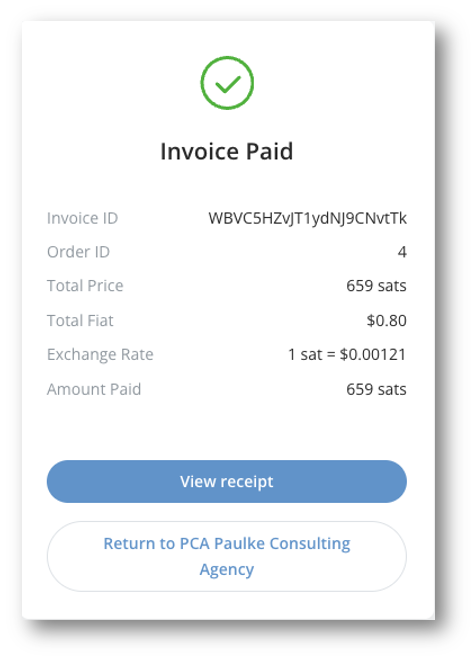
If the payment was successful, your customer will see a confirmation page similar to this.

This user guide shows you how to accept Bitcoin and Lightning payments with the Gravity Forms Bitcoin module. It covers the technical requirements, plugin installation, connecting your Coinsnap account or a BTCPay Server, configuring all relevant settings, and enabling Bitcoin payments directly inside your Gravity Forms forms.
Accept Bitcoin and Lightning payments in Gravity Forms securely.

These requirements must be met for Coinsnap for Gravity Forms to function correctly:
All the requirements listed above are met, and you have successfully installed the plugin in your WordPress.
If not, here is a Step-by-step: How to install a Coinsnap plugin in WordPress guide to help you install the plugin.
You will soon be able to accept Bitcoin payments (on-chain and Lightning) directly from within your Gravity Forms —
without the need for a complex shop system like WooCommerce or traditional payment providers such as credit cards or PayPal.
But before you can do that, you need to configure Bitcoin payments in your Gravity Forms plugin.
Go to Gravity Forms / Settings [1] in the black sidebar on the left. Then click Coinsnap [2].
You will then see this screen:
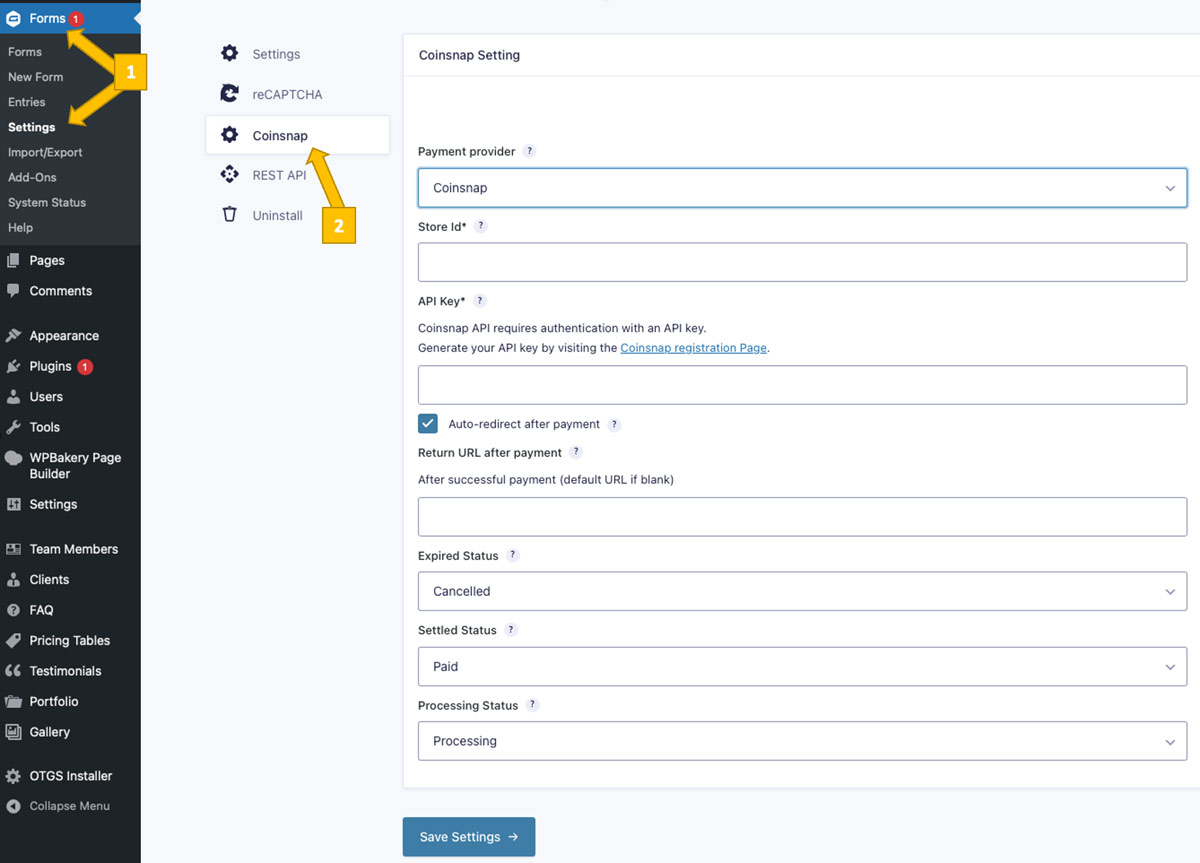
You will now need to configure three parameters: your chosen payment provider (Coinsnap or your BTCPay Server), the after-payment redirect page URL, and the mapping of payment statuses (Expired, Settled, Processing).
The following steps show you how to set everything up correctly:
You now need to choose between two payment gateways: Coinsnap or your own BTCPay Server.

After making your selection, enter the corresponding Store ID and API Key for either Coinsnap or BTCPay Server. The following steps explain how to do this.
Coinsnap is the easiest option. Coinsnap handles the technical setup for you and connects your store to Bitcoin and Lightning payments with just a few clicks. It’s ideal if you want a quick, hassle-free solution without managing your own payment infrastructure.
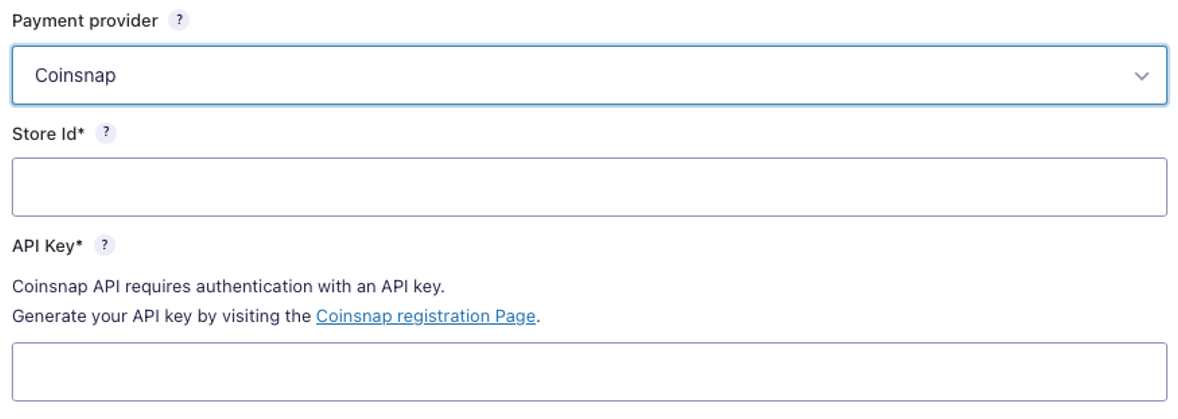
Just enter your Coinsnap Store ID and API Key.
Learn here how to retrieve your Coinsnap Store ID and API Key:
-> Step-by-step explanation: How to connect your Coinsnap account with your plugin
BTCPay Server is a self-hosted option for merchants who want full control. You run your own Bitcoin and Lightning payment server, manage your own wallets, and don’t rely on a third party. This option offers maximum independence but requires more technical setup and maintenance.
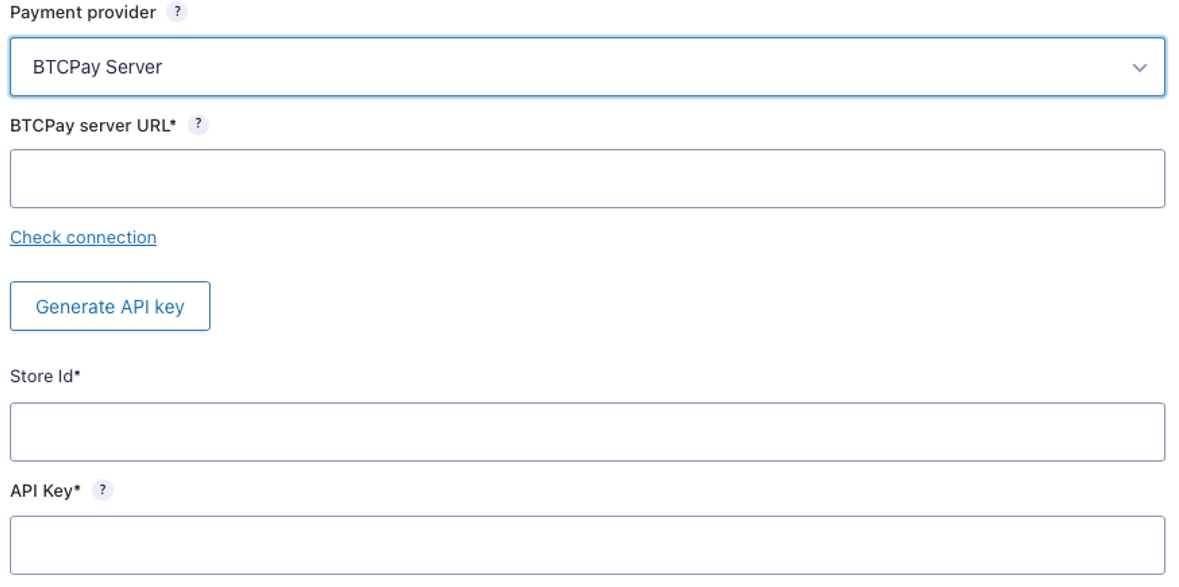
First, enter your BTCPay Server URL. Then enter the corresponding BTCPay Server Store ID and API Key.
Learn how to retrieve your Store ID and API Key using our BTCPay Server wizard here:
-> Step-by-step explanation: How to connect your BTCPay Server with your plugin

Here you define what happens after a successful payment. If Redirect after payment is enabled, the customer will be redirected back to the page containing the form from which the payment was made.
If you prefer to use a custom thank-you page, create the page and enter its URL in the Return URL after payment field.
Gravity Forms tracks the status of each payment associated with a form submission. These statuses indicate whether a payment is Authorized, Paid, Processing, Failed, Active, Cancelled, Pending, Refunded, or Voided and help you understand the current state of each transaction.
The Coinsnap Bitcoin payment plugin only tracks three payment statuses — Expired, Settled, and Processing. You now need to map each of these to the corresponding status option available in Gravity Forms.
We strongly recommend keeping the default payment status mapping, as it provides the most reliable and consistent behavior in almost all cases; selecting an alternative option from the dropdown should only be done in very specific, exceptional circumstances.
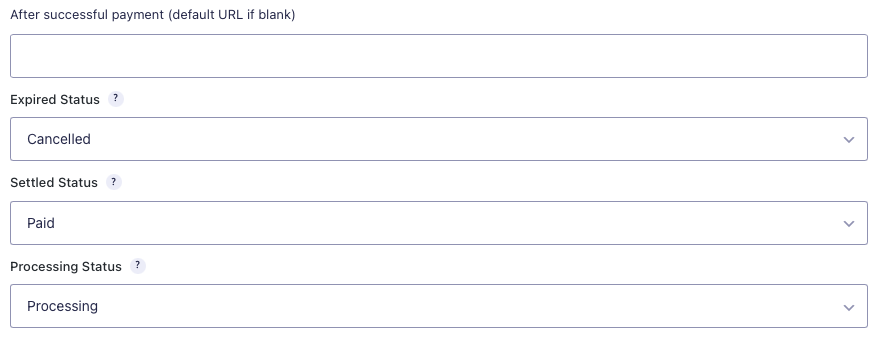
Save these settings by clicking the button below, and your Gravity Form will be ready to accept Bitcoin payments (on-chain and Lightning).
In the next step, we’ll show you how to integrate Bitcoin payments directly into any of your Gravity Forms.
First set up a form (i.e. a Bitcoin donation form) in Gravity forms. As soon as you are done, click on Settings on the top and choose Coinsnap.
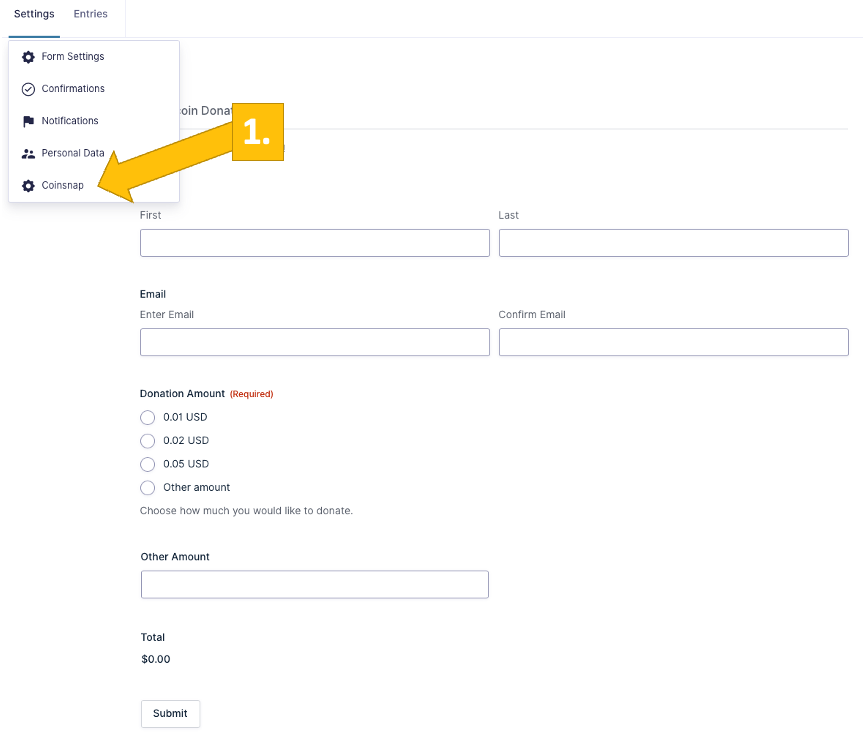
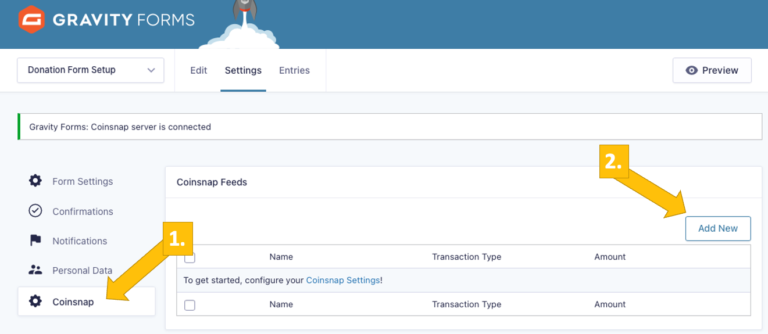
After you clicked on Coinsnap [1], you now have to add a Coinsnap feed to your form, simply by clicking on add new [2].
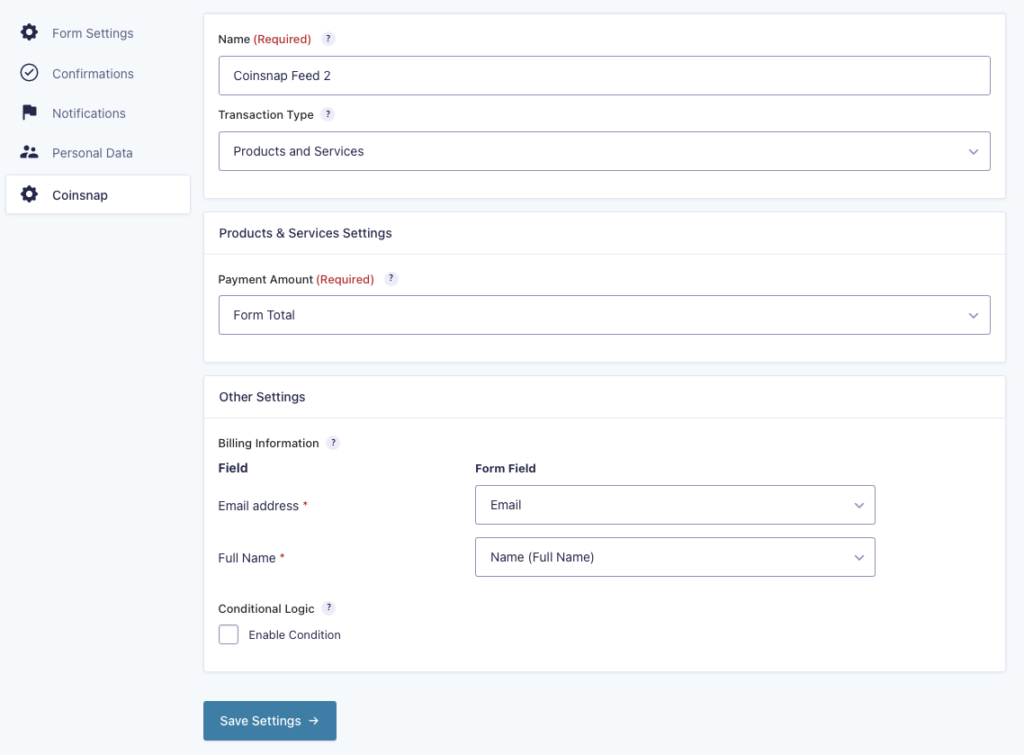
You will then see this window. We recommend not changing any of the parameters. However, if needed, you can adjust the name, transaction type, or payment amount using the respective fields. Click Save when you are done.
If you now open the forms overview in Gravity Forms, you will notice that your plugin Donation Form Setup is now active – meaning that Bitcoin payment now works in the plugin.
Now, in the form you want to use on your website, click on </> Embed on the top right of your form [1].
Next, either copy the Form ID [2] or the shortcode [3] and place it at the appropriate place of your website.
And your visitors can now donate sats to your cause!

After all settings have been made, a test transaction should be carried out.
Fill out a Gravity Form you have just created and click on the blue button, starting the Bitcoin payment.
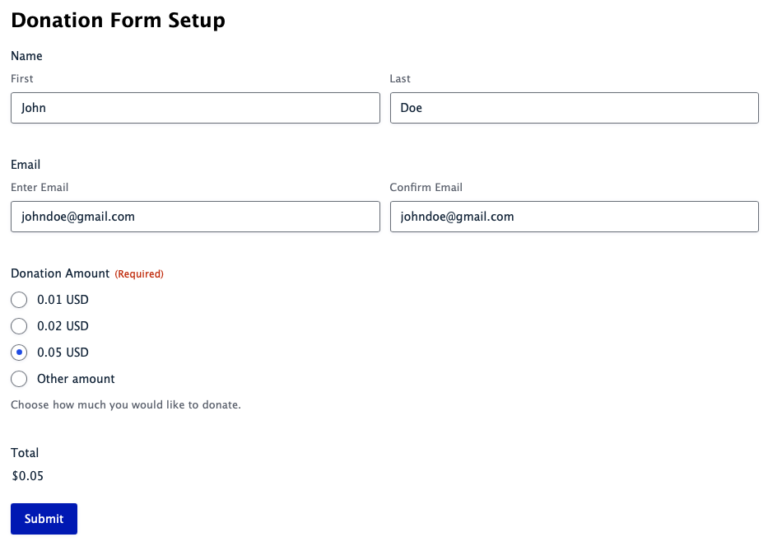
You will now be redirected to the Bitcoin payment page to complete the purchase.
The Bitcoin payment page is now displayed and offers the payer the option of paying with Bitcoin or Lightning. Both methods are integrated in the displayed QR code.
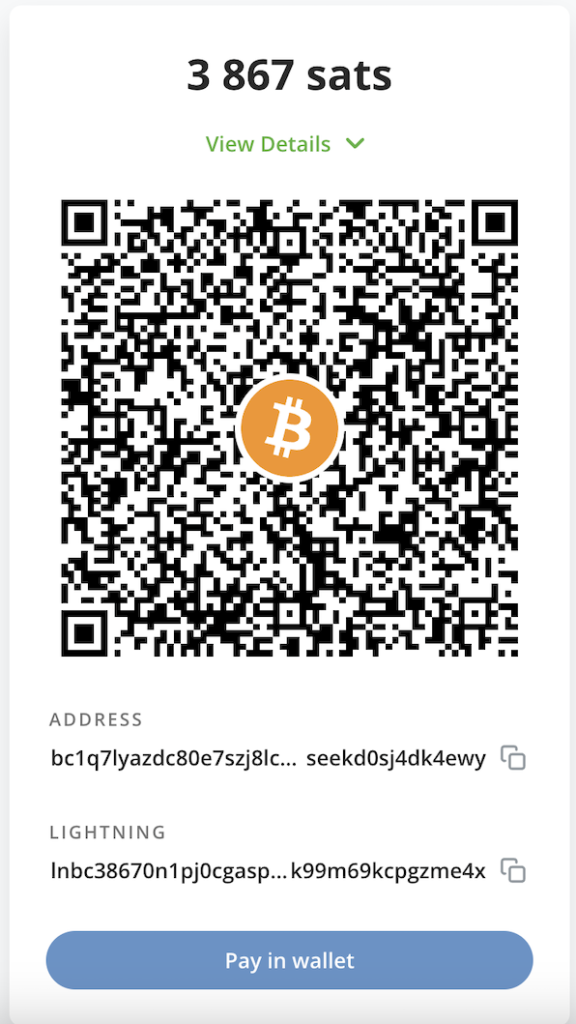
After a successful payment, the invoice can be viewed in detail.
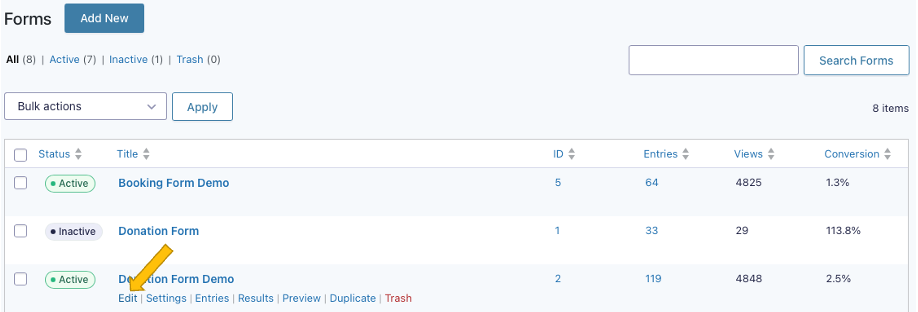
Go to Forms, select the form you just received a payment from, and click on Edit.
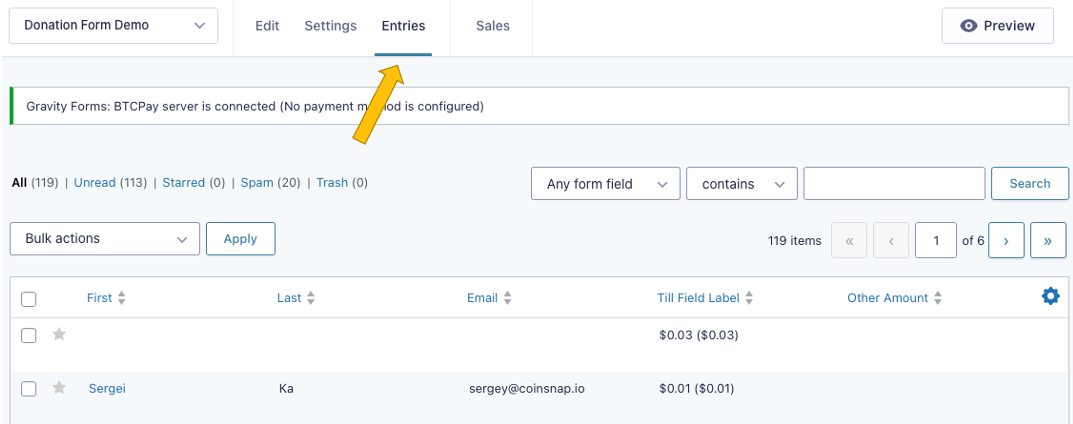
In the form, click on Entries at the top, and you will see all payments that have been made through this form.
No. The Gravity Forms Bitcoin module allows you to accept Bitcoin and Lightning payments directly through forms, without requiring a shop or checkout system.
Yes. You can connect the Gravity Forms Bitcoin module either to a Coinsnap account or to your own BTCPay Server by entering the corresponding Store ID and API credentials.
The Gravity Forms Bitcoin module supports both on-chain Bitcoin payments and Lightning payments via a single QR code.
Coinsnap uses three payment statuses: Expired, Processing, and Settled. These must be mapped to the corresponding Gravity Forms payment statuses during configuration.
In almost all cases, the default mapping is recommended. Alternative mappings should only be used in very specific scenarios where you fully understand the implications.
Yes. Once configured, you can add Bitcoin payments to any Gravity Form on your website.
After configuration, create a test Gravity Form, initiate a payment, and complete a test transaction using a Bitcoin or Lightning wallet to verify the setup.